

If you love a beautiful charcuterie board but want something lighter and a little unexpected for your next gathering, this SeaCuterie board (Seafood Charcuterie Board) is for you. It is festive, flexible, and honestly one of the most fun appetizer spreads you can put together.
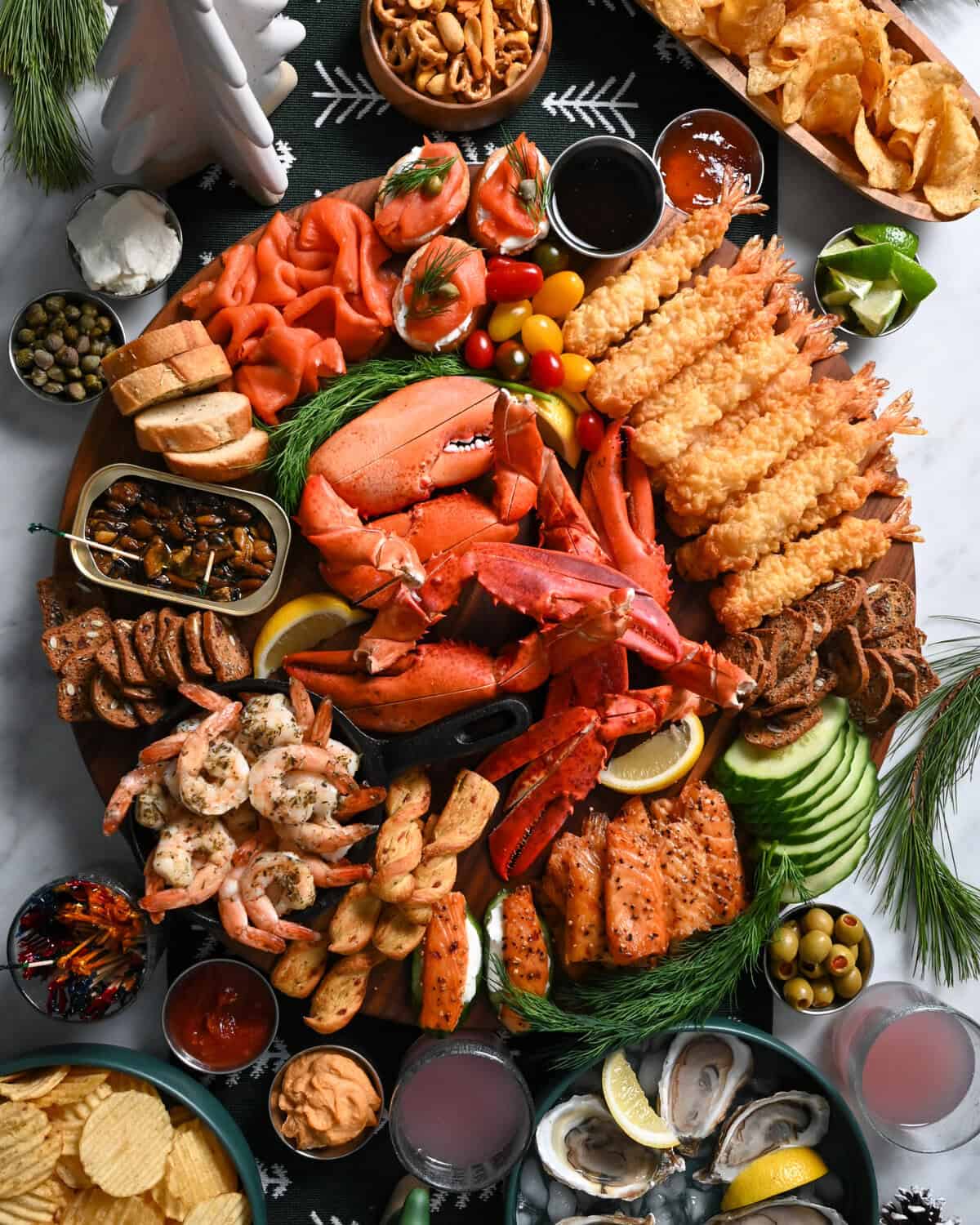
Think fresh seafood, smoked fish, crispy bites, crunchy crackers, and bright sauces, all arranged so guests can build their perfect bite. There is very little cooking stress, no strict rules, and everything can be customized to suit your crowd.
Jump to:
Why We Love This Recipe
- Impressive but easy: Looks stunning with very little prep.
- Flexible: Works for elegant dinners or casual get-togethers.
- Make-ahead friendly: Most components are ready to serve.
- Conversation-worthy: Guests love building their own bites.
What Is a SeaCuterie Board?
A SeaCuterie board is a seafood-focused take on a traditional charcuterie board. Instead of cured meats and cheeses, the board features fresh, smoked, cooked, and tinned seafood paired with crackers, breads, sauces, and garnishes.
Ingredients
Seafood Selection
Choose a mix of raw, cooked, and ready-to-serve items.
- Lobster claws or tails
- Oysters
- Shrimp
- Smoked salmon slices or strips
- Smoked mussels or other tinned seafood
- Tempura shrimp or other crispy seafood
Crunch and Carbs
- Assorted crackers, about 2 cups (120 g)
- Crostini or sliced baguette, 12 to 16 pieces
- Chips or flatbreads, optional, about 2 cups (120 g)
Sauces and Accompaniments
- Cocktail sauce
- Hot sauces
- Lemon wedges
- Mignonette or vinaigrette
- Dill, capers, or chives
- Olives or pickled vegetables
- Cucumber slices and cherry tomatoes
See the recipe card below for exact quantities.
How to Build a SeaCuterie Board

Choose the Board
Select a large wooden cutting board or platter and place it in the centre of your table. Do not worry if the board feels full. Place a few bowls onto the table if needed. This creates a relaxed, abundant presentation that works especially well for seafood boards.
Arrange the Seafood
Arrange the seafood in small, distinct groups, leaving space between each type so everything is easy to see and reach. If you are serving more than one kind of shrimp, keep them separate to add visual variety and make it clear what each option is.
If you're serving oysters, have a few shucked at a time and served on ice. If serving lobster, have the shells scored or provide lobster crackers. Rotate seafood from the refrigerator to keep everything cold. Replenish ice under raw seafood as needed.
Create Sample Bites
Prepare a few sample combinations to inspire your guests. For example, spread cream cheese on a cracker, top with smoked salmon, dill, capers and dill, then place a few of these beside the smoked salmon. This shows how flavours pair together and helps guests feel confident building their own bites.
Add Sauces with Intention
Place sauces in small bowls close to the seafood they pair best with. Cocktail sauce works well beside shrimp, mignonette belongs near oysters, and lemon wedges are ideal next to richer seafood like lobster and smoked salmon.
Fill in the Spaces
Fill any remaining gaps with crackers, cucumber slices, crostini, chips, olives, fresh herbs (dill), and extra lemon wedges. The goal is a board that looks generous and inviting while still being easy to navigate. Refresh the crackers and veggies as needed throughout the night.
Serving Essentials
Seafood boards are more enjoyable when guests have the right tools. Set out toothpicks or cocktail picks for easy grabbing, along with small forks or seafood picks for shrimp and smoked fish. These small details help keep the board tidy and make it easier for guests to build their bites.
If you are serving lobster or shell-on seafood, include lobster crackers and seafood forks so guests can access every bit. For oysters in the shell, place an oyster knife and a folded kitchen towel nearby for safe handling.
Finish by setting out small plates or appetizer plates and plenty of napkins. Seafood can be deliciously messy, so having napkins close by keeps everyone comfortable and encourages guests to enjoy the board without hesitation.
Food Safety Notes for Raw Seafood
- Purchase raw seafood, especially oysters and shrimp, from a trusted, reputable source with proper cold storage.
- Keep raw seafood refrigerated at or below 40°F (4°C) until ready to serve.
- Store raw seafood on ice in the refrigerator and drain melted ice so items do not sit in water.
- Shuck oysters just before serving or keep them tightly covered and chilled if shucked in advance. How to Shuck an Oyster
- Use separate utensils for raw seafood and cooked items to avoid cross-contamination.
- Discard any oysters that do not open when tapped or smell off. Fresh oysters should smell clean and briny, never fishy.
- Do not leave raw seafood out at room temperature for longer than 30 minutes (or 15 minutes in warmer rooms). Replace with chilled backups as needed.
Tips for Success
- Keep seafood well chilled until ready to serve, especially oysters and shrimp.
- Pat smoked salmon and cooked seafood dry to prevent excess moisture on the board.
- Use separate utensils for raw seafood and cooked items for food safety.
- If serving oysters, include a small towel and oyster knife if guests want to shuck their own.
Substitutions and Variations
- No oysters? Add crab claws, scallops, or extra shrimp instead.
- Swap lobster for snow crab or king crab legs.
- Use canned sardines, trout, or octopus in place of smoked mussels.
- Gluten-free crackers or lettuce cups work well for guests with dietary needs.
Serving Suggestions
Serve this SeaCuterie board with chilled white wine, sparkling wine, or a crisp lager. It works beautifully as a holiday starter, cocktail party centerpiece, or casual gathering appetizer.
Other Seafood Recipes to Try Next:
📖 Recipe
SeaCuterie Board (Seafood Charcuterie Board)
Ingredients
Seafood Selection – Choose a mix of raw cooked, and ready-to-serve items.
- 1 to 1 ½ lb lobster claws or tails steamed and chilled (450 to 680 g)
- 12 to 18 oysters shucked or in shell,
- 1 lb cooked shrimp peeled and deveined (450 g)
- 6 to 8 oz smoked salmon slices or strips (170 to 225 g)
- 1 tin smoked mussels or other tinned seafood about 4 oz (115 g)
- 6 to 8 pieces tempura shrimp or other crispy seafood warmed in an airfryer or oven optional,
Crunch and Carbs
- Assorted crackers about 2 cups (120 g)
- Crostini or sliced baguette 12 to 16 pieces
- Chips or flatbreads optional, about 2 cups (120 g)
Sauces and Accompaniments
- Cocktail sauce
- Hot sauces
- Lemon wedges
- Mignonette or vinaigrette
- Dill, capers, or chives
- Olives or pickled vegetables
- Cucumber slices and cherry tomatoes
Instructions
How to Build a SeaCuterie Board
Choose the Board
- Select a large wooden cutting board or platter and place it in the centre of your table. Do not worry if the board feels full. Place a few bowls onto the table if needed. This creates a relaxed, abundant presentation that works especially well for seafood boards.
Arrange the Seafood
- Arrange the seafood in small, distinct groups, leaving space between each type so everything is easy to see and reach. If you are serving more than one kind of shrimp, keep them separate to add visual variety and make it clear what each option is.
- If you're serving oysters, have a few shucked at a time and served on ice. If serving lobster, have the shells scored and or provide lobster crackers. Rotate seafood from the refrigerator to keep everything cold. Replenish ice under raw seafood as needed
Create Sample Bites
- Prepare a few sample combinations to inspire your guests. For example, spread cream cheese on a cracker, top with smoked salmon, dill, capers and dill, then place a few of these beside the smoked salmon. This shows how flavours pair together and helps guests feel confident building their own bites.
Add Sauces with Intention
- Place sauces in small bowls close to the seafood they pair best with. Cocktail sauce works well beside shrimp, mignonette belongs near oysters, and lemon wedges are ideal next to richer seafood like lobster and smoked salmon.
Fill in the Spaces
- Fill any remaining gaps with crackers, cucumber slices, crostini, chips, olives, fresh herbs (dill), and extra lemon wedges. The goal is a board that looks generous and inviting while still being easy to navigate. Refresh the crackers and veggies as needed throughout the night.
Serving Essentials
- Seafood boards are more enjoyable when guests have the right tools. Set out toothpicks or cocktail picks for easy grabbing, along with small forks or seafood picks for shrimp and smoked fish. These small details help keep the board tidy and make it easier for guests to build their bites.
- If you are serving lobster or shell-on seafood, include lobster crackers and seafood forks so guests can access every bit. For oysters in the shell, place an oyster knife and a folded kitchen towel nearby for safe handling.
- Finish by setting out small plates or appetizer plates and plenty of napkins. Seafood can be deliciously messy, so having napkins close by keeps everyone comfortable and encourages guests to enjoy the board without hesitation.
💬Did you try this?
- We'd really appreciate a rating and quick review! It helps more home cooks find the recipe, and we love hearing what you think. Tag us if you do!
Video
Notes
- Purchase raw seafood, especially oysters and shrimp, from a trusted, reputable source with proper cold storage.
- Keep raw seafood refrigerated at or below 40°F (4°C) until ready to serve.
- Store raw seafood on ice in the refrigerator and drain melted ice so items do not sit in water.
- Shuck oysters just before serving or keep them tightly covered and chilled if shucked in advance. How to Shuck an Oyster
- Use separate utensils for raw seafood and cooked items to avoid cross-contamination.
- Discard any oysters that do not open when tapped or smell off. Fresh oysters should smell clean and briny, never fishy.
- Do not leave raw seafood out at room temperature for longer than 30 minutes (or 15 minutes in warmer rooms). Replace with chilled backups as needed.
- Keep seafood well chilled until ready to serve, especially oysters and shrimp.
- Pat smoked salmon and cooked seafood dry to prevent excess moisture on the board.
- Use separate utensils for raw seafood and cooked items for food safety.
- If serving oysters, include a small towel and oyster knife if guests want to shuck their own.
- No oysters? Add crab claws, scallops, or extra shrimp instead.
- Swap lobster for snow crab or king crab legs.
- Use canned sardines, trout, or octopus in place of smoked mussels.
- Gluten-free crackers or lettuce cups work well for guests with dietary needs.

Leave a Reply