

There is something so satisfying about the crunch of perfectly crispy wild Coho salmon skin paired with a creamy, bright pea purée. We are leaning into fresh, bright flavours here that make a standard weeknight feel like a special occasion without the fuss.

Grab your favourite stainless steel or titanium-bonded skillet and let's get those potatoes roasting! This dish is all about textures: the snap of the potato, the creaminess of the peas, and that melt-in-your-mouth Coho salmon finished with a zesty lemon drizzle. You are going to love how the mint and parsley in the purée wake up the whole plate.
Jump to:
Why We Love This Recipe
- Texture Contrast: You get the trifecta of “crunch” from the skin and potatoes, “creamy” from the peas, and “tender” from the fish.
- Vibrant Presentation: The bright green purée and yellow potatoes make this a stunning dish for hosting.
- Balanced Flavours: The lemon oil cuts through the richness of the salmon and butter perfectly.
Ingredients
Potatoes
- Baby yellow flesh potatoes
- Kosher salt
- Baking soda
- Olive oil
- Kosher salt
- Black pepper
Lemon Oil
- Extra virgin olive oil
- Lemon zest
- Lemon juice
- Kosher salt
Pea Purée
- Frozen peas
- Unsalted butter
- Heavy cream
- Kosher salt
- Black pepper
- Lemon juice
- Fresh mint (or basil)
- Fresh parsley
Salmon
- Salmon fillets
- Kosher salt
- Black pepper
- Neutral oil, like avocado oil
- Unsalted butter
- Garlic clove
- Fresh dill
See the recipe card below for quantities.
Instructions
Start the Potatoes
Preheat your oven to 425°F. Place a large sheet pan inside the oven while it preheats.
Add the potatoes to a 4 qt saucepan and cover with cold water by about 1 inch. Add 1 tablespoon salt and the baking soda.
➡Tip: Don’t skip the baking soda in the potato water! It breaks down the starch on the surface, which is the secret to that extreme “crunch.”

Bring to a boil, then reduce to a medium-high simmer. Cook until a knife meets slight resistance, about 8 to 12 minutes.
Drain well and return the potatoes to the hot pot. Let them steam dry for 5 minutes. Shake the pot vigorously to rough up the edges; this creates the extra crispy bits!
Make the Lemon Oil
While the potatoes steam, whisk together the olive oil, lemon zest, lemon juice, and a pinch of salt in a small bowl. Set this aside to let the flavours marry.
Roast the Potatoes
Toss the potatoes with olive oil, salt, and black pepper. Carefully pull the hot pan from the oven and arrange the potatoes cut side down. Roast for 25 to 30 minutes until golden. Flip only if they need extra colour on the top.

Prep the Salmon
Pat the salmon very dry with paper towels, especially the skin side. Season with the kosher salt and pepper. Let the fillets sit at room temperature for 15 to 20 minutes before cooking.

Make the Pea Purée
Bring salted water to a boil in the small saucepan. Add the peas and cook for 2 minutes. Before draining, reserve 2 to 4 tablespoon of the pea cooking water.
Drain the peas and return the saucepan to low heat. Add the butter, cream, peas, salt, and pepper. Warm gently for about 1 minute, just until heated through.
Blend until smooth with an immersion blender. Add the lemon juice, mint, and parsley, then blend very briefly or stir well. Loosen with a little reserved pea water, if needed, until spoonable. Keep warm over very low heat.

Cook the Salmon
When the potatoes are nearly done, preheat a large 12.5" skillet over medium-high heat to about 400°F. Add the neutral oil.
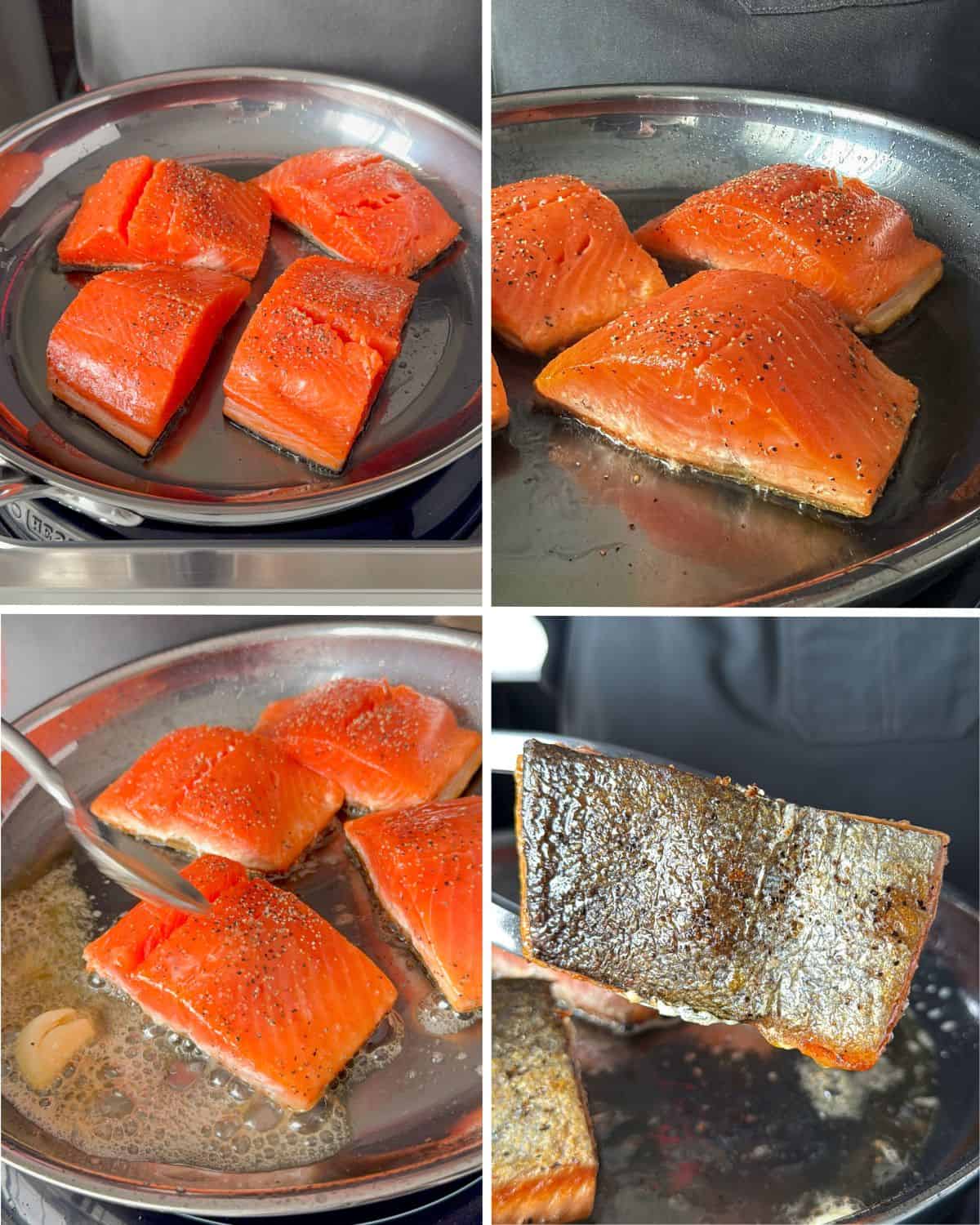
Place the salmon in the skillet skin-side down and press gently for 15 to 20 seconds to ensure even contact. Cook for 4 to 6 minutes, depending on thickness, until the skin is crisp and the salmon releases naturally.
➡Tip: If your salmon skin is sticking, it isn’t ready to flip. Wait for it to naturally release from the pan to ensure it stays intact.
Reduce the heat to 325 to 350°F. Add the butter and crushed garlic and baste for about 1 minute. Add the chopped dill during the final 30 seconds.
Flip and cook the flesh side for 15 to 30 seconds for thicker fillets only, or leave unflipped if the fillets are thinner and nearly at temperature. Aim for an internal temperature of 120°F to 125°F. Rest for 2 minutes.
Plate
Spoon a generous amount of pea purée onto each plate and use the back of the spoon to create a “swoosh.” Place the salmon on top. Cluster the potatoes to the side. Drizzle the lemon oil around the plate and garnish with fresh dill.
Serving Suggestion: This pairs wonderfully with a crisp, chilled Sauvignon Blanc or a light sparkling water with a twist of lime.

Why Coho?
We chose Wild Coho for this recipe because of its “Goldilocks” fat content. It is richer than Sockeye but leaner than King (Spring) salmon. This makes it incredibly versatile for searing. You get a clean, mild flavour that doesn’t compete with the minty pea purée, but enough natural oil to achieve that signature crunch on the skin.
Best Substitutes for Coho Salmon
- Steelhead Trout: This is the closest match for Coho. It has a similar “Goldilocks” fat content and a mild flavour that won’t overpower the pea purée.
- Sockeye Salmon: A very common wild-caught option. It is leaner and has a much more robust, “salmon-forward” flavour. Just be sure to reduce your cook time by 1 or 2 minutes so it stays juicy.
- Arctic Char: A great sustainable choice found at many high-end grocers. The flavour is a cross between trout and salmon, and the skin is exceptionally thin, which makes it very easy to get that “shatter-crisp” texture.
- King (Chinook) Salmon: Known as “Spring Salmon” in Canada, this is the premium choice. It is much fattier and richer than Coho. It handles high heat well but requires a slightly longer sear to fully render the skin.
- If you’re shopping at a standard grocery store, you will likely see Atlantic Salmon. While this is a fine substitute, it is almost always farmed and significantly fattier than Wild Coho. So you should aim for an internal temperature of 125°F (52°C) to ensure the center is perfectly cooked through.
Pro Tips
Mastering the Release
- If you are using a professional stainless or titanium-bonded skillet, the secret to the fish not sticking is patience. When the cold Coho salmon hits the hot oil, it will naturally “grab” the pan. Do not try to move it! As the proteins sear and the skin dehydrates, the fish will naturally release from the surface. If it's resisting your spatula, it simply needs another 30 to 60 seconds to finish that perfect crust.
The Science of the “Alkaline Boil”
- Adding baking soda to your boiling water is the secret to that glass-like crunch on your potatoes. By increasing the water’s pH, the potato's surface breaks down just enough to create a starchy layer. When you shake the potatoes in your ProBond saucepan, those rough edges catch the olive oil and roast into a thick, golden crust that stays crispy long after they leave the oven.
Mastering the Cold-Start Skin
- For the crispiest salmon skin, moisture is your enemy. Always pat the fillets bone-dry with a paper towel. When you place the fish into your skillet at medium-high heat (around 400°F), press down gently with a flexible spatula for the first 20 seconds. This prevents the skin from curling and ensures 100% contact with the surface, resulting in an even, potato-chip-style crunch.
Mastering the Coho Sear (The “Leaner Fish” Secret)
- Since Coho is slightly leaner salmon, it can overcook quickly. To keep it succulent, we recommend focusing 90% of the cook time on the skin side in your skillet. This creates a heat shield that gently cooks the flesh from the bottom up. Only flip for the final 15 seconds to “kiss” the top with heat. This ensures the center remains a perfect medium-rare (120°F to 125°F) while the skin stays shatteringly crisp.

Transparency is important to us! We are Hestan Culinary ambassadors and this post contains affiliate links, but this is not a sponsored post; the thoughts, tips, and results shared in this recipe are 100% our own!
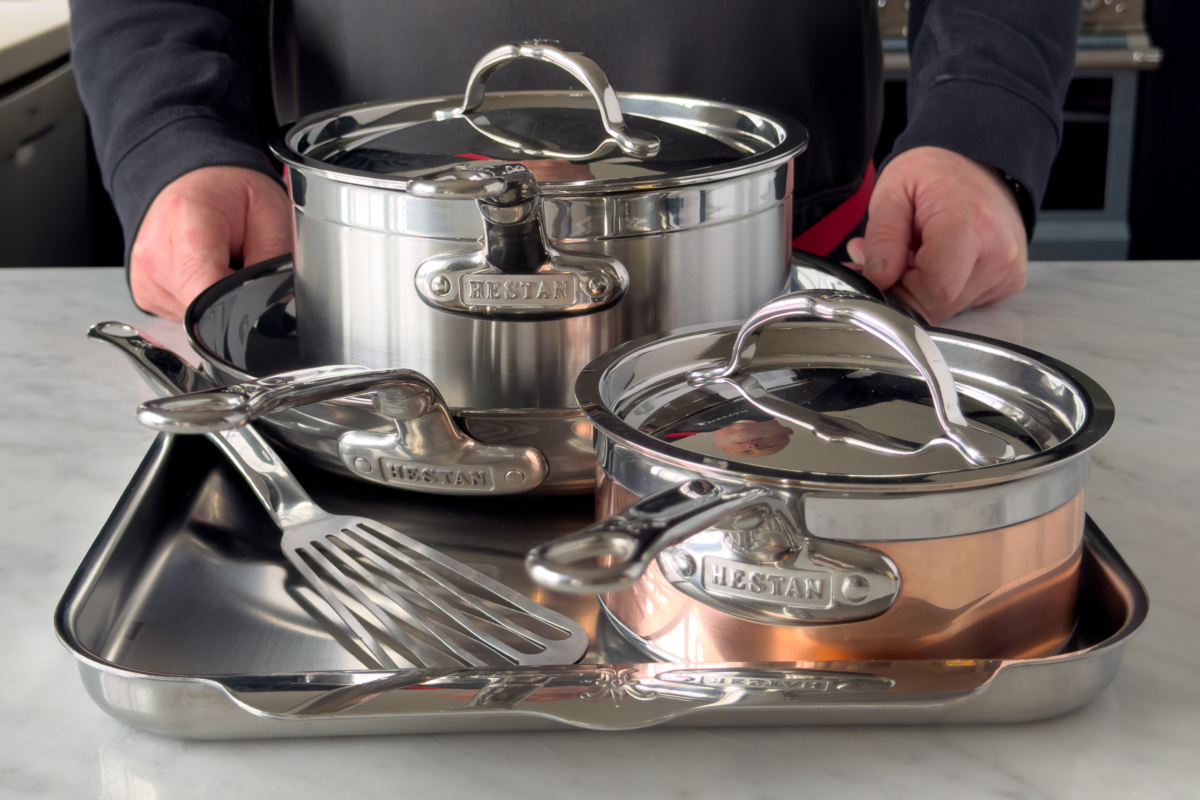
- Equipment Used: For this recipe, we utilized a variety of Hestan collections to manage the different textures. The Hestan NanoBond 12.5" Skillet is our top pick for Coho salmon because the titanium surface prevents the leaner flesh from sticking. We prepped the potatoes in the Hestan ProBond 4qt Saucepan and roasted them on the Hestan OvenBond Sheet Pan. To keep the pea purée vibrant and precisely warmed, the Hestan CopperBond 1.5qt Saucepan was essential.
Loved this Salmon Recipe? Try these next:
- Salmon with Ponzu Sauce
- Ora King Salmon with Spinach & Chow-Chow
- Weeknight Miso Black Cod Rice Noodle Bowls (Air Fryer)
- Blackened Salmon with Creole Sauce
📖 Recipe

Crispy Skin Salmon with Minty Pea Purée & Roasted Potatoes
Ingredients
Potatoes
- 1 lb baby yellow flesh potatoes halved (460 g)
- 1 tablespoon kosher salt 15 g, for the cooking water
- ½ teaspoon baking soda
- 2 tablespoon olive oil 30 ml
- ½ teaspoon kosher salt
- ¼ teaspoon black pepper
Lemon Oil
- ¼ cup extra virgin olive oil 60 ml
- 1 teaspoon lemon zest finely grated
- 1 tablespoon fresh lemon juice 15 ml
- Pinch kosher salt
Pea Purée
- 2 cups frozen peas 300 g
- 2 tablespoon unsalted butter 30 g
- ¼ cup heavy cream 60 ml
- ½ teaspoon kosher salt
- ¼ teaspoon black pepper
- 1 tablespoon fresh lemon juice 15 ml
- 1 tablespoon fresh mint finely chopped or basil
- 1 tablespoon fresh parsley finely chopped
Salmon
- 4 skin-on Coho salmon fillets 6 to 7 oz each (170 to 200 g each)
- 1 teaspoon kosher salt
- ½ teaspoon black pepper
- 1 tablespoon neutral oil like avocado oil (15 ml)
- 1 tablespoon unsalted butter 15 g
- 1 garlic clove lightly crushed
- 1 tablespoon fresh dill finely chopped
- Fresh dill fronds for finishing
Instructions
Start the Potatoes
- Preheat your oven to 425°F. Place a large sheet pan inside the oven while it preheats.
- Add the potatoes to a 4 qt saucepan and cover with cold water by about 1 inch. Add 1 tablespoon salt and the baking soda. ➡Tip: Don't skip the baking soda in the potato water! It breaks down the starch on the surface, which is the secret to that extreme "crunch."
- Bring to a boil, then reduce to a medium-high simmer. Cook until a knife meets slight resistance, about 8 to 12 minutes.
- Drain well and return the potatoes to the hot pot. Let them steam dry for 5 minutes. Shake the pot vigorously to rough up the edges; this creates the extra crispy bits!
Make the Lemon Oil
- While the potatoes steam, whisk together the olive oil, lemon zest, lemon juice, and a pinch of salt in a small bowl. Set this aside to let the flavours marry.
Roast the Potatoes
- Toss the potatoes with olive oil, salt, and black pepper. Carefully pull the hot pan from the oven and arrange the potatoes cut side down. Roast for 25 to 30 minutes until golden. Flip only if they need extra colour on the top.
Prep the Salmon
- Pat the salmon very dry with paper towels, especially the skin side. Season with the kosher salt and pepper. Let the fillets sit at room temperature for 15 to 20 minutes before cooking.
Make the Pea Purée
- Bring salted water to a boil in the small saucepan. Add the peas and cook for 2 minutes. Before draining, reserve 2 to 4 tablespoon of the pea cooking water.
- Drain the peas and return the saucepan to low heat. Add the butter, cream, peas, salt, and pepper. Warm gently for about 1 minute, just until heated through.
- Blend until smooth with an immersion blender. Add the lemon juice, mint, and parsley, then blend very briefly or stir well. Loosen with a little reserved pea water, if needed, until spoonable. Keep warm over very low heat.
Cook the Salmon
- When the potatoes are nearly done, preheat a large 12.5" skillet over medium-high heat to about 400°F. Add the neutral oil.
- Place the salmon in the skillet skin-side down and press gently for 15 to 20 seconds to ensure even contact. Cook for 4 to 6 minutes, depending on thickness, until the skin is crisp and the salmon releases naturally. ➡Tip: If your salmon skin is sticking, it isn't ready to flip. Wait for it to naturally release from the pan to ensure it stays intact.
- Reduce the heat to 325 to 350°F. Add the butter and crushed garlic and baste for about 1 minute. Add the chopped dill during the final 30 seconds.
- Flip and cook the flesh side for 15 to 30 seconds for thicker fillets only, or leave unflipped if the fillets are thinner and nearly at temperature. Aim for an internal temperature of 120°F to 125°F. Rest for 2 minutes.
Plate
- Spoon a generous amount of pea purée onto each plate and use the back of the spoon to create a “swoosh.” Place the salmon on top. Cluster the potatoes to the side. Drizzle the lemon oil around the plate and garnish with fresh dill.
- Serving Suggestion: This pairs wonderfully with a crisp, chilled Sauvignon Blanc or a light sparkling water with a twist of lime.
💬Tried this recipe?
- We'd really appreciate a rating and quick review! It helps more home cooks find the recipe, and we love hearing what you think.
Video
Notes
Pro Tips
- Mastering the Release: If you are using a professional stainless or titanium-bonded skillet, the secret to the fish not sticking is patience. When the cold Coho salmon hits the hot oil, it will naturally "grab" the pan. Do not try to move it! As the proteins sear and the skin dehydrates, the fish will naturally release from the surface. If it’s resisting your spatula, it simply needs another 30 to 60 seconds to finish that perfect crust.
- The Science of the "Alkaline Boil": Adding baking soda to your boiling water is the secret to that glass-like crunch on your potatoes. By increasing the water's pH, the potato’s surface breaks down just enough to create a starchy layer. When you shake the potatoes in your ProBond saucepan, those rough edges catch the olive oil and roast into a thick, golden crust that stays crispy long after they leave the oven.
- Mastering the Cold-Start Skin: For the crispiest salmon skin, moisture is your enemy. Always pat the fillets bone-dry with a paper towel. When you place the fish into your skillet at medium-high heat (around 400°F), press down gently with a flexible spatula for the first 20 seconds. This prevents the skin from curling and ensures 100% contact with the surface, resulting in an even, potato-chip-style crunch.
- Mastering the Coho Sear (The "Leaner Fish" Secret) Since Coho is slightly leaner salmon, it can overcook quickly. To keep it succulent, we recommend focusing 90% of the cook time on the skin side in your skillet. This creates a heat shield that gently cooks the flesh from the bottom up. Only flip for the final 15 seconds to "kiss" the top with heat. This ensures the center remains a perfect medium-rare (120°F to 125°F) while the skin stays shatteringly crisp.

Leave a Reply