

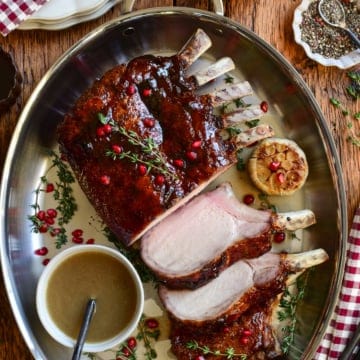
Sticky, tart-sweet pomegranate lacquer meets crisp golden fat and tender, juicy slices in this rack of pork that is built for a special occasion. Spoon a little warm shallot and thyme jus onto each chop and you have an impressive holiday dinner without having to spend the entire evening in the kitchen.
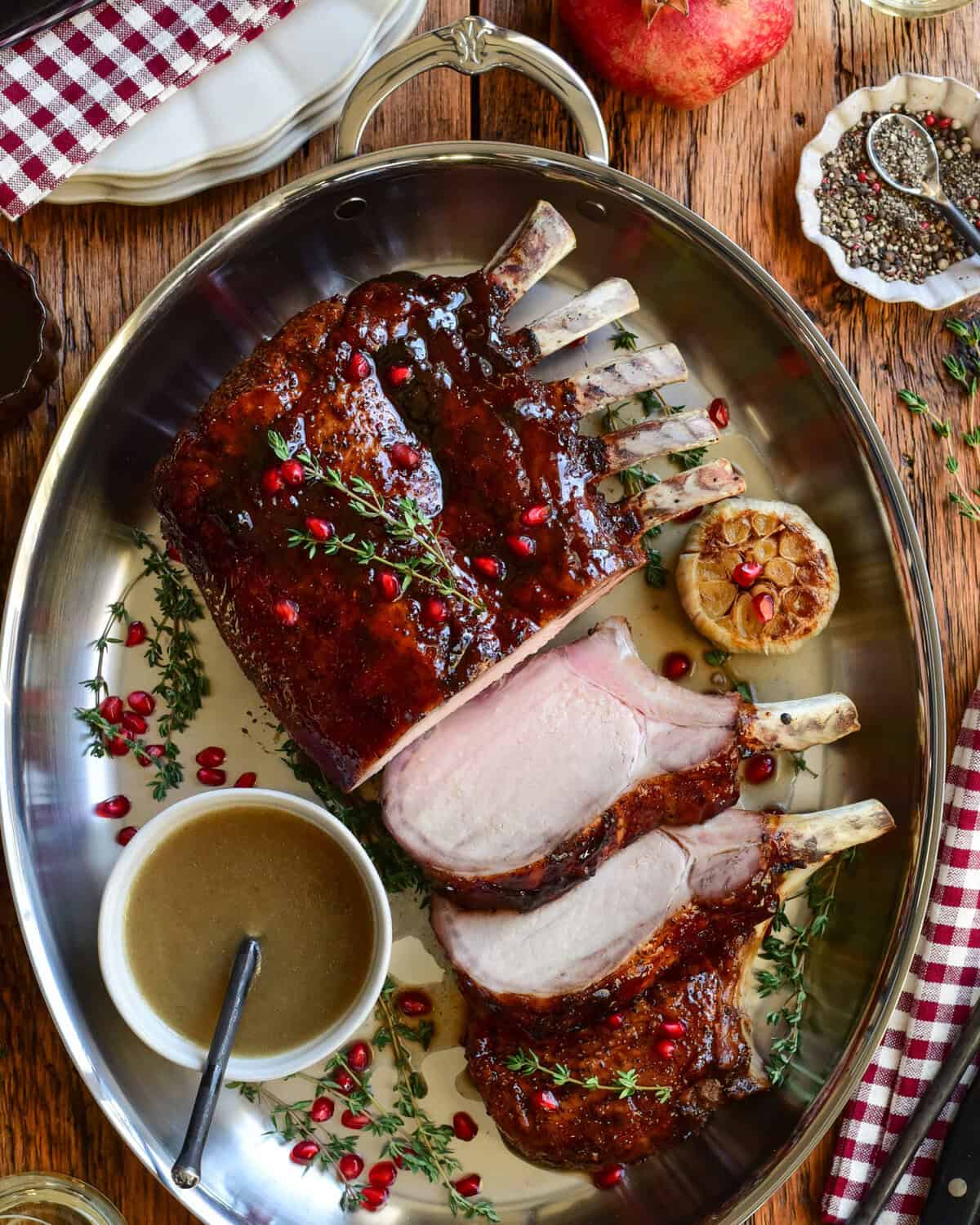
When we tested this French-cut pork rib roast, our main goal was keeping the roast juicy from edge to edge while building a glaze that actually clings instead of burning. Starting with a 12- to 24-hour dry brine takes care of the seasoning and helps the fat render cleanly at 450°F (230°C). Dropping the heat to finish roasting, then brushing on three thin layers of the pomegranate, roasted garlic and Aleppo pepper glaze right at the end gives you a glossy finish with gentle, fruity warmth. Better yet, the glaze and jus can both be prepped days ahead so dinner day stays calm and manageable.
Jump to:
Why We Love This Recipe
- Balanced sweet, tart and savoury flavours: Unsweetened pomegranate juice and molasses bring bright acidity that cuts right through the richness of the pork, while roasted garlic and Aleppo pepper add gentle, rounded warmth.
- Juicy interior with a golden exterior: A 12- to 24-hour dry brine seasons the meat deeply and dries the surface so the fat cap browns evenly at high heat before finishing gently at 325°F (165°C).
- Lacquer-like glaze without scorching: Brushing the pomegranate reduction on in thin coats only during the final stretch builds colour and shine without burning the natural sugars.
- Smart make-ahead components: Both the glaze and the shallot-thyme jus can be made up to two or three days early, leaving you with minimal hands-on work on dinner day.
Key Techniques & Ingredient Definitions
- What is a French-Cut Rack of Pork? A bone-in pork rib roast where the meat and fat have been trimmed away from the ends of the rib bones (“Frenched”) for a clean presentation and easy carving between the ribs.
- What is Aleppo Pepper? A coarsely ground, mild-to-medium Middle Eastern chili flake (also called Halaby pepper) with fruity, sun-dried tomato undertones and gentle warmth rather than sharp heat. You can substitute ½ teaspoon crushed red pepper flakes mixed with 1 teaspoon sweet paprika.
Ingredients
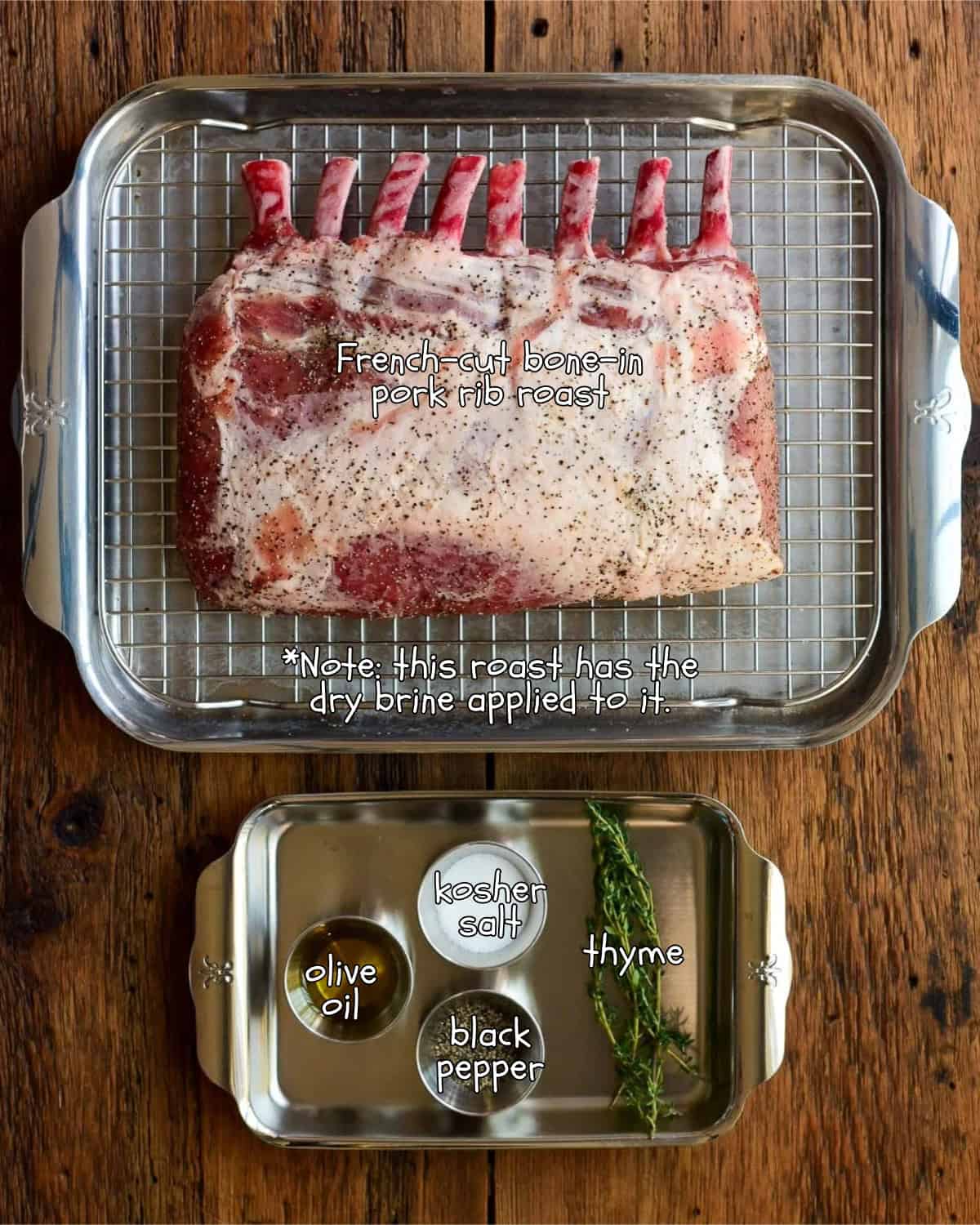
Pork Roast
- French-cut bone-in pork rib roast
- Fine sea salt
- Black pepper
- Extra-virgin olive oil
- Fresh thyme
Pomegranate & Aleppo Pepper Glaze
- Pomegranate juice
- Pomegranate molasses
- Honey
- Red wine vinegar
- Aleppo pepper
- Garlic
- Fresh thyme
- Fine sea salt
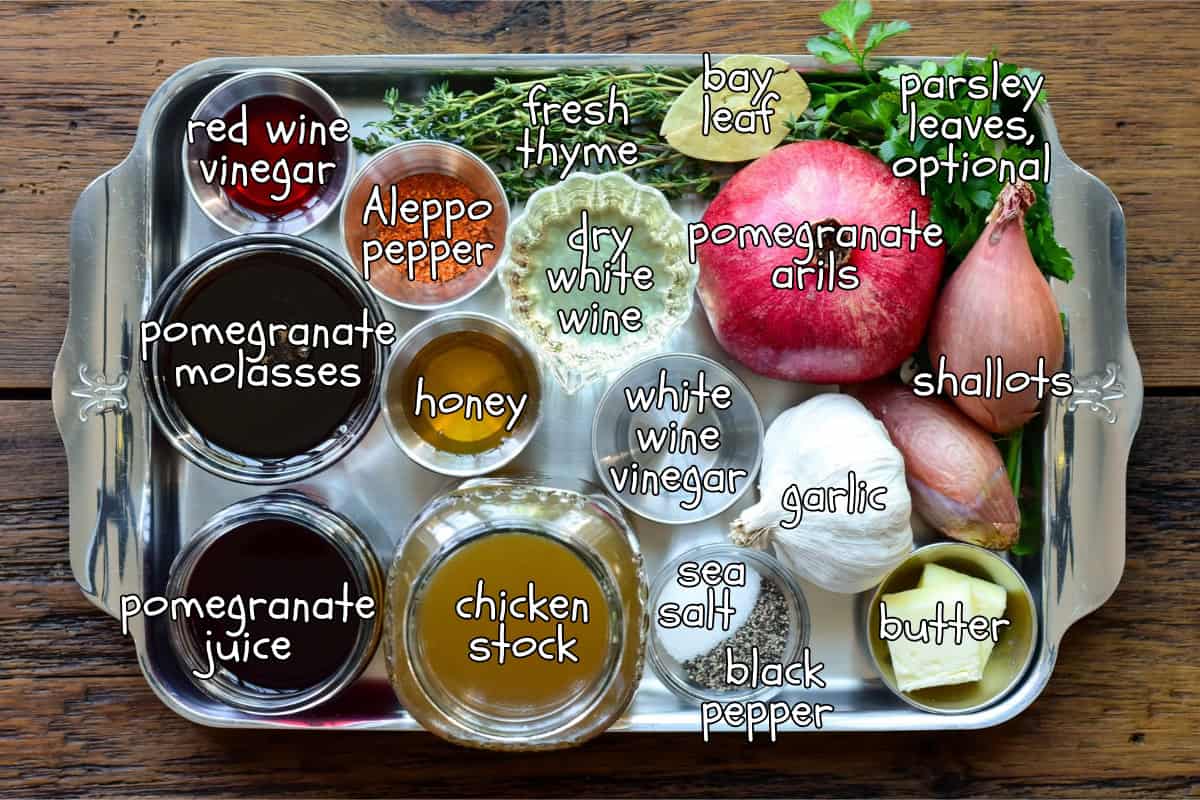
Shallot & Thyme Jus
- Unsalted butter
- Shallots
- Dry white wine
- Chicken stock
- Fresh thyme
- Bay leaf
- Sea salt and black pepper
- White wine vinegar, only if needed
Garnish
- Pomegranate arils
- Flat-leaf parsley leaves, optional
- Fresh thyme leaves
See recipe card below for quantities.
Instructions
Dry-Brine the Pork (12 to 24 Hours Ahead)
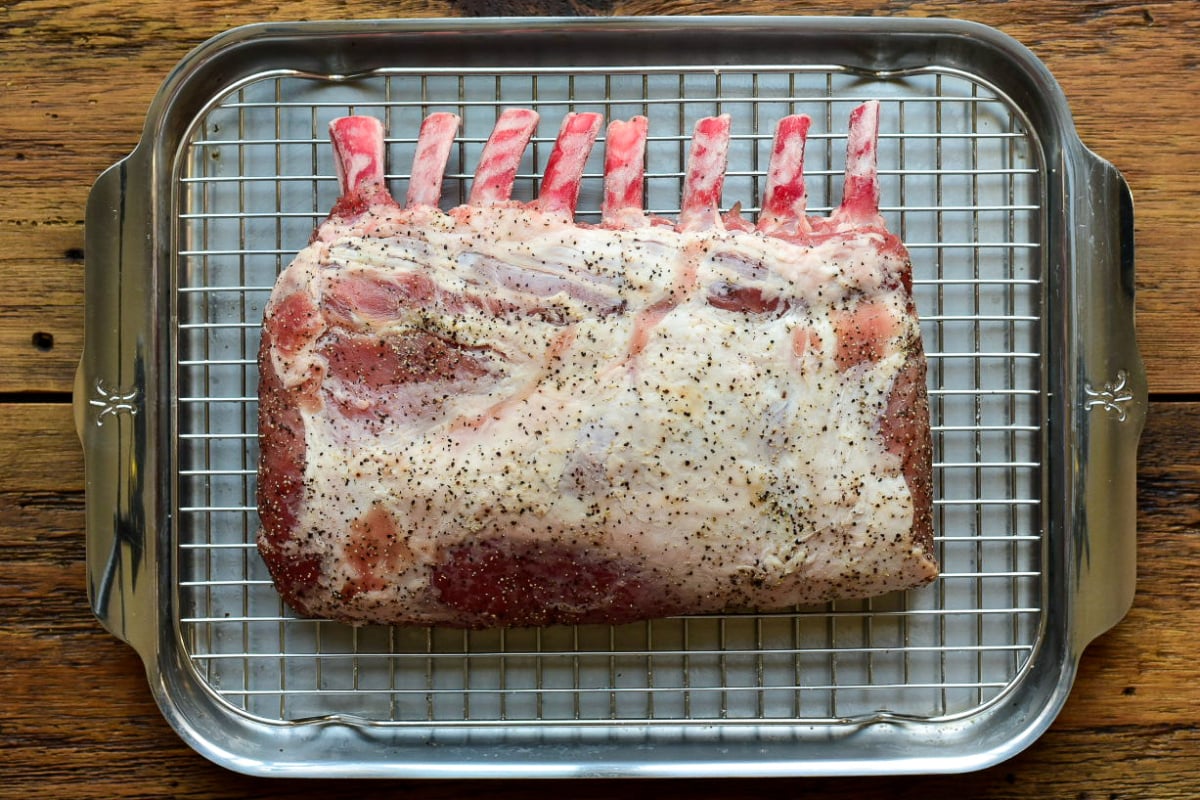
Pat the pork thoroughly dry with paper towels. Combine the fine sea salt and black pepper in a small bowl, then season the roast evenly on all sides, concentrating on the meat and fat cap.
Place the pork bone-side down on a wire rack set over a rimmed baking sheet. Refrigerate uncovered for 12 to 24 hours.
Roast the Garlic
Preheat the oven to 375°F (190°C).
Slice the top quarter off a small head of garlic to expose the cloves, drizzle lightly with olive oil, and wrap tightly in foil. Roast for 35 to 45 minutes, until the cloves are soft and golden.
Let cool slightly, then squeeze out 3 cloves and mash them into a smooth paste. (Save the remaining roasted cloves for spreading on bread or stirring into mashed potatoes.)
Prepare the Pomegranate Glaze
Combine the pomegranate juice and thyme sprigs in a small saucepan. Bring to a gentle simmer over medium heat and reduce by half, about 12 to 18 minutes.
Remove and discard the thyme sprigs.
Whisk in the pomegranate molasses, honey, 2 teaspoon of the red wine vinegar, Aleppo pepper, roasted garlic paste, and salt.
Simmer gently for 3 to 5 minutes, stirring frequently, until glossy and lightly syrupy. Taste and add the remaining 1 teaspoon of red wine vinegar if needed to balance the sweetness.
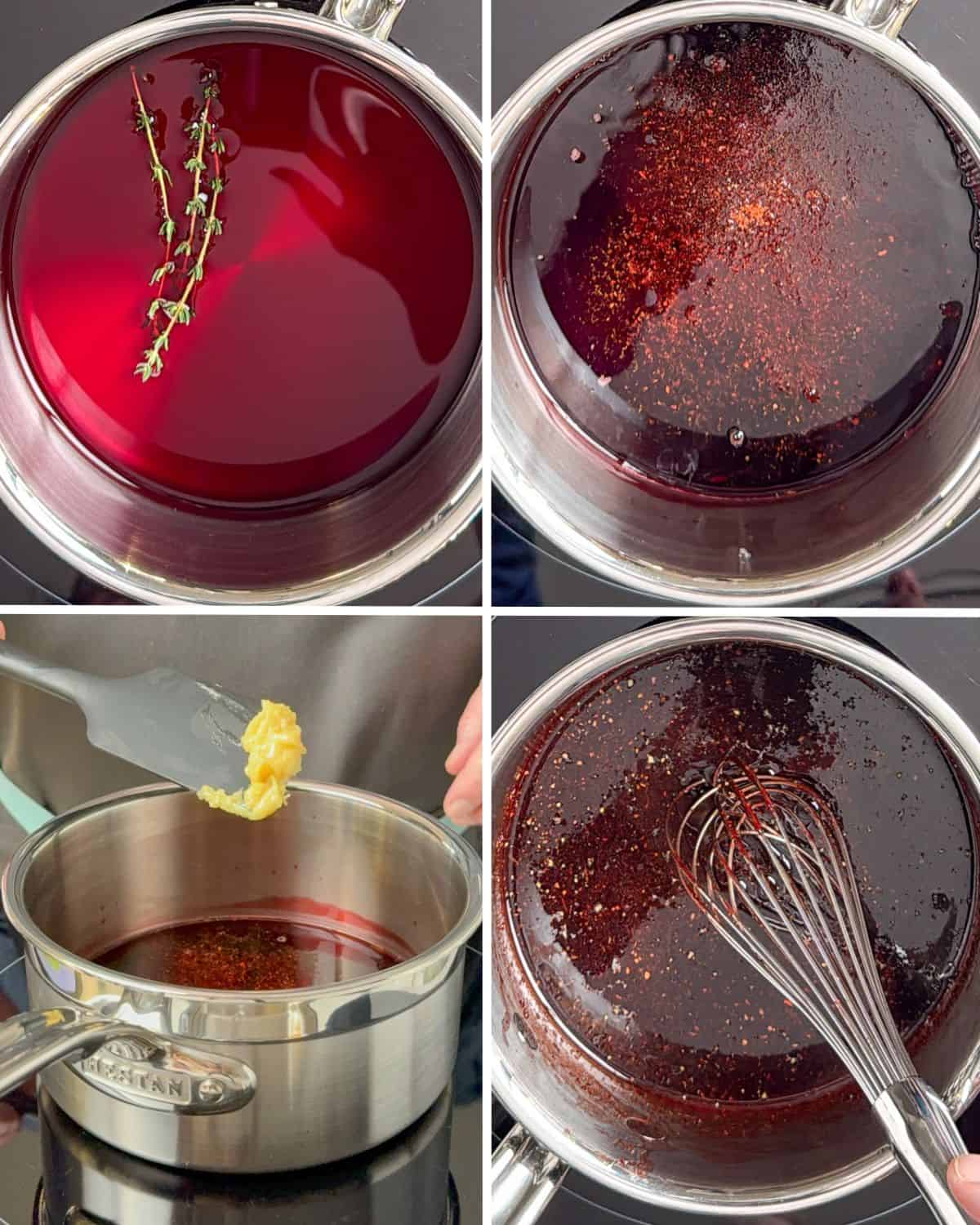
Check the consistency: the glaze should coat a pastry brush while still spreading easily. If it becomes too thick, whisk in warm water, 1 teaspoon at a time.
Reserve 3 tbsp of the glaze in a separate clean container for brushing at the very end. Keep the remaining glaze nearby for basting during roasting.
Prepare the Shallot & Thyme Jus
Start the jus as soon as the pork goes into the oven so it reduces while the roast cooks.
Melt 1 tablespoon of the butter in a medium saucepan over medium heat. Add the shallots and cook for 5 to 7 minutes, stirring occasionally, until softened and lightly golden.
Pour in the dry white wine and simmer until nearly evaporated, leaving just a splash in the pan.
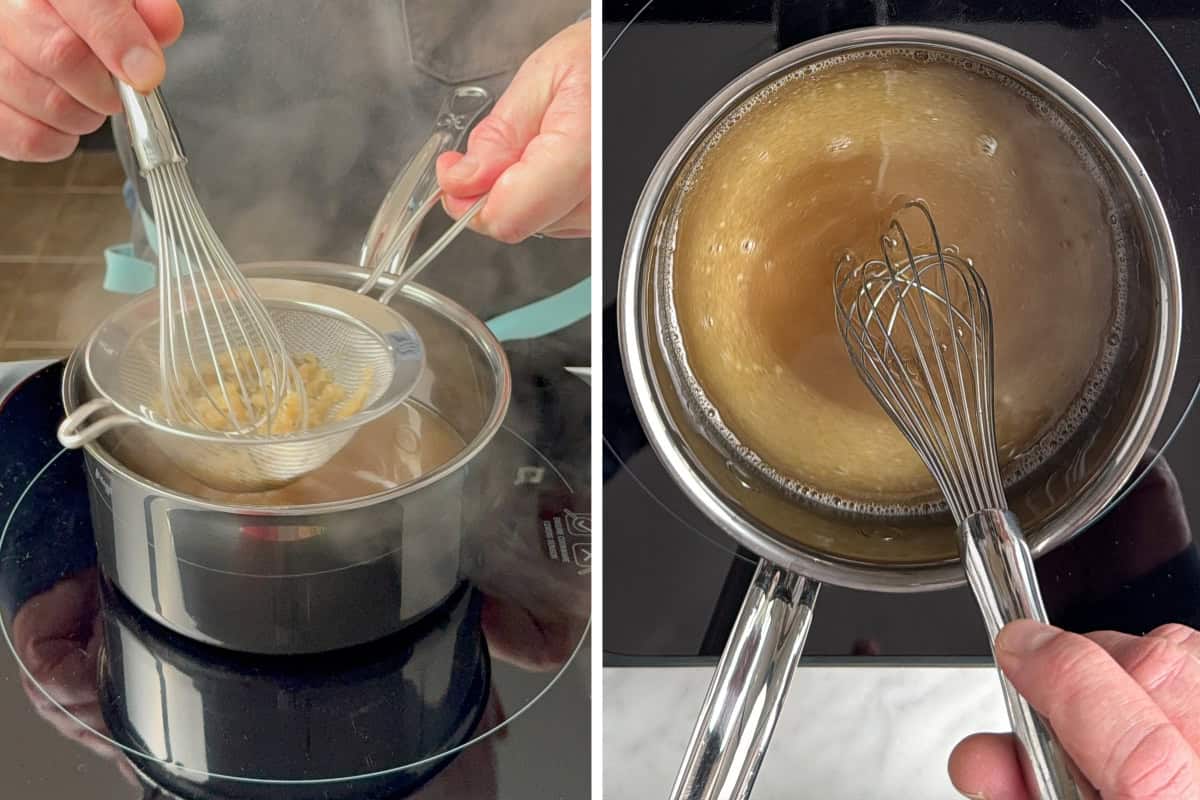
Add the chicken stock, thyme sprigs, and bay leaf. Bring to a gentle simmer and reduce by more than half, about 30 to 45 minutes.
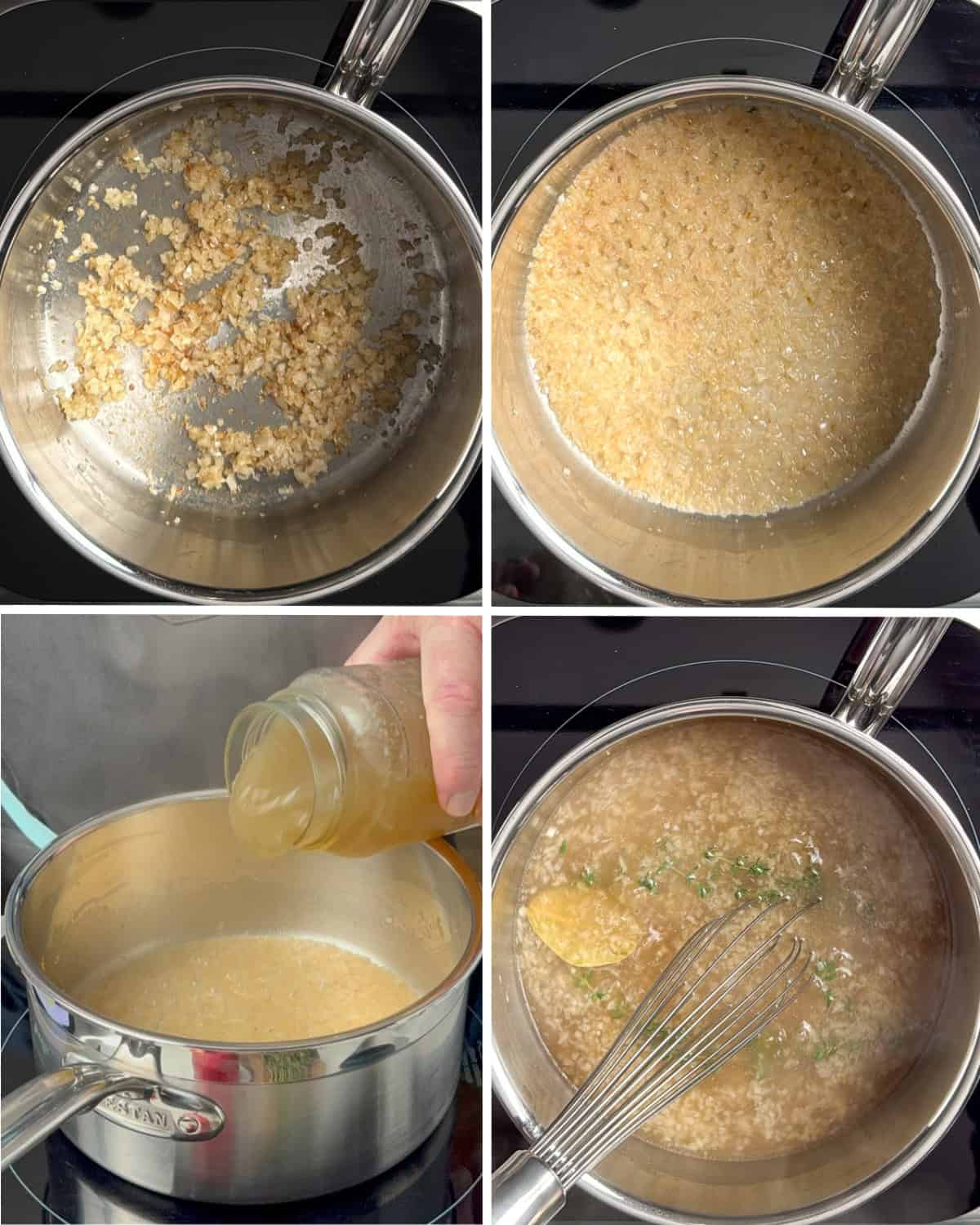
Strain through a fine-mesh sieve into a clean saucepan, pressing gently on the shallots before discarding the solids. Cover and set aside until the pork is resting.
Just before serving, reheat the jus gently over low heat. Taste and season with salt and freshly ground black pepper, adding the white wine vinegar only if you want a touch more brightness.
Remove from the heat and whisk in the remaining 1 tablespoon of cold butter until glossy and emulsified. Serve warm.
Roast the Pork: Initial Browning
Remove the pork from the refrigerator about 30 minutes before roasting to take the chill off.
Preheat the oven to 450°F (230°C).
Rub the exposed meat lightly with olive oil. Place the roast bone-side down, fat-side up, on a rack in a roasting pan, tucking the thyme sprigs underneath the meat.
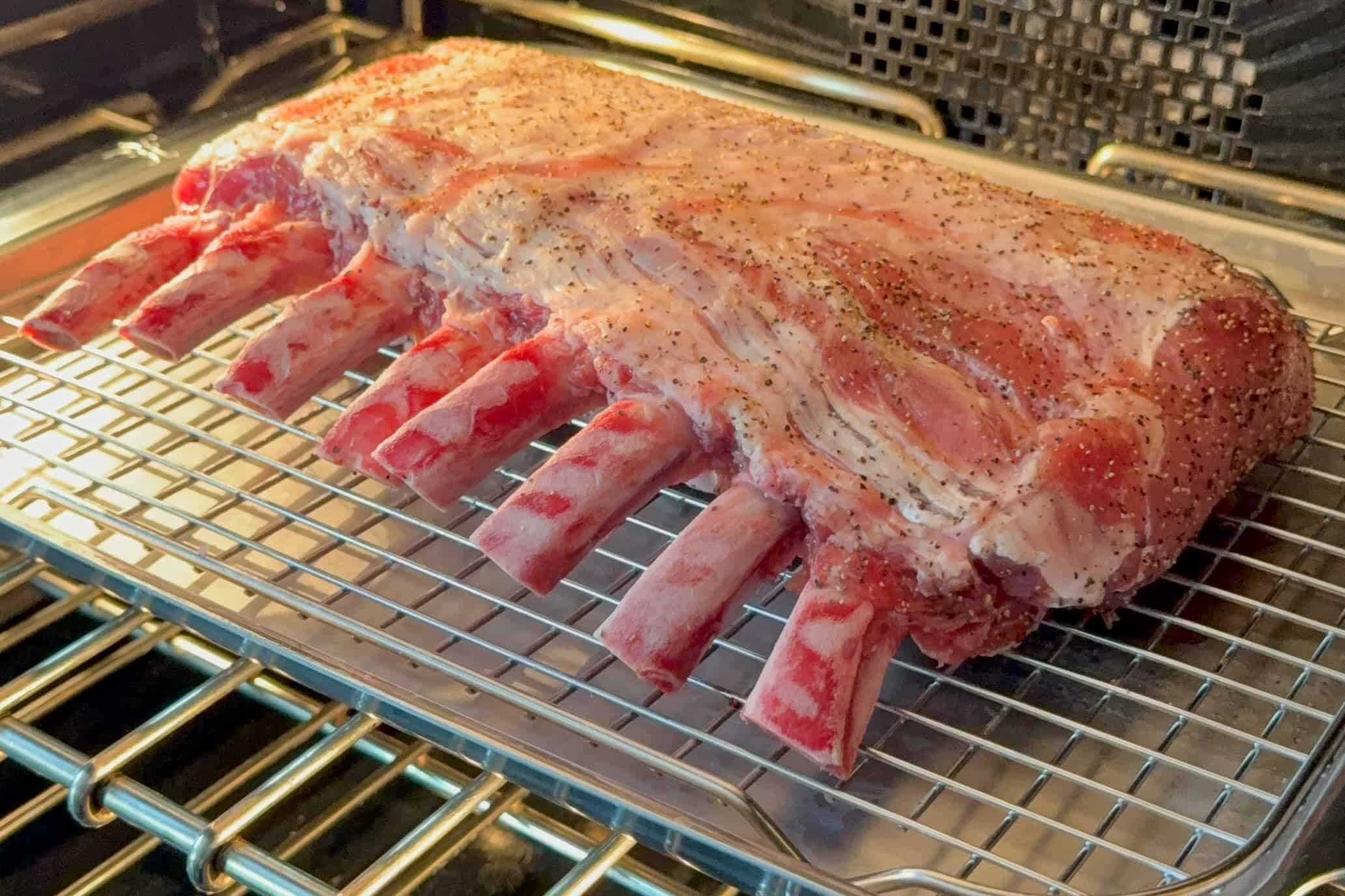
Insert a leave-in digital thermometer into the thickest part of the loin, making sure the tip does not touch a bone. Or plan to check with an instant-read thermometer.
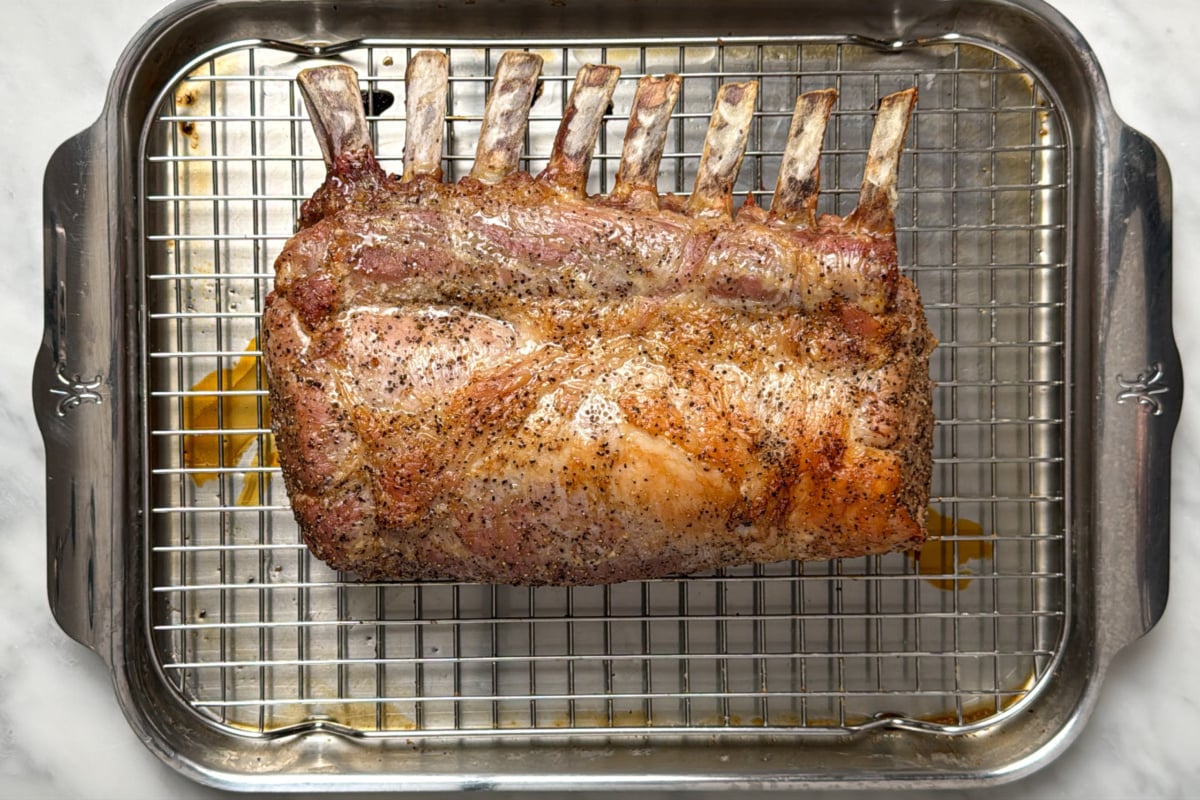
Roast uncovered for 15 minutes, until the fat cap begins to render and turns golden. If the exposed rib bone tips begin darkening too quickly, wrap them loosely in small strips of foil.
Continue Roasting at Lower Heat
Reduce the oven temperature to 325°F (165°C) without opening the door or removing the pork.
Continue roasting until the internal temperature reaches 115°F (46°C), roughly 45 to 65 minutes depending on the thickness of your roast and your oven. Rely on your thermometer rather than the clock.
Build the Pomegranate Glaze
Once the centre reaches 115°F (46°C), increase the oven temperature to 375°F (190°C).
Brush a thin, even layer of warm pomegranate glaze over the meat and fat cap, avoiding the exposed bones.
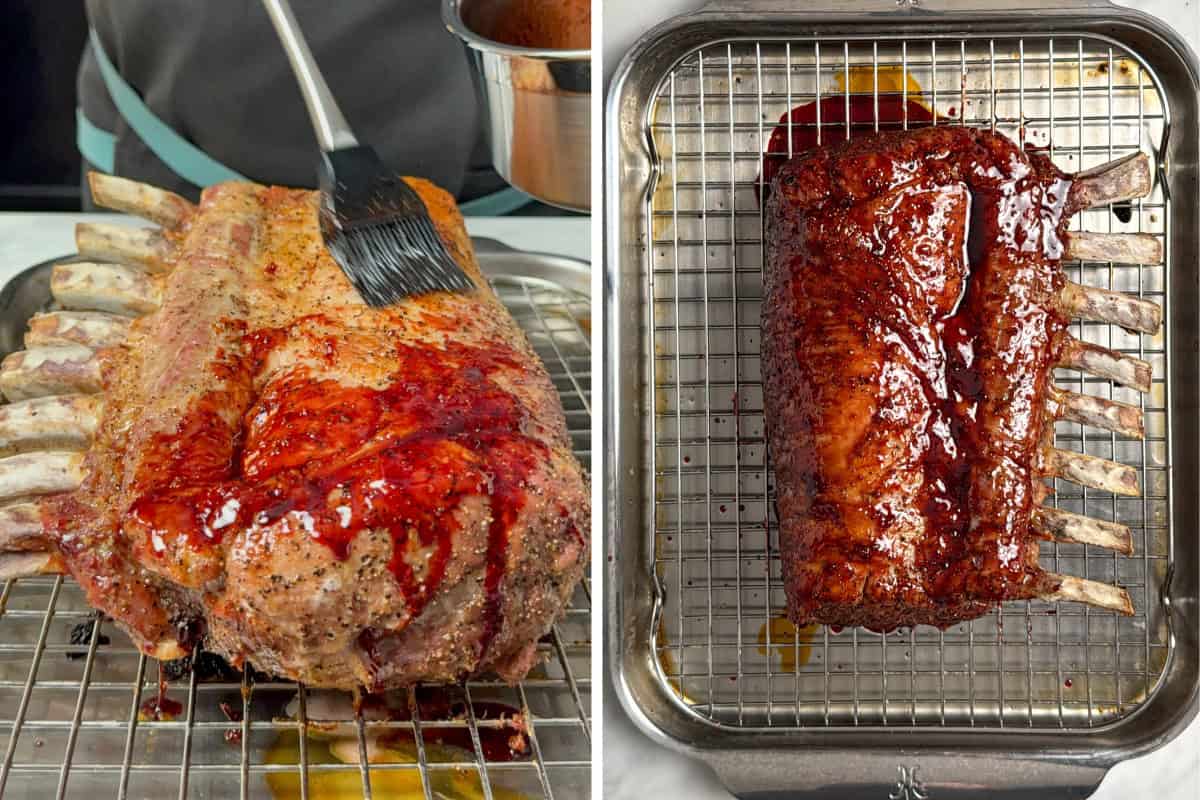
Return the roast to the oven for 8 minutes, then brush on a second thin layer of glaze.
Continue roasting, applying a third thin coat if colour and internal temperature allow. If the glaze begins to darken too quickly, lower the oven temperature to 350°F (175°C).
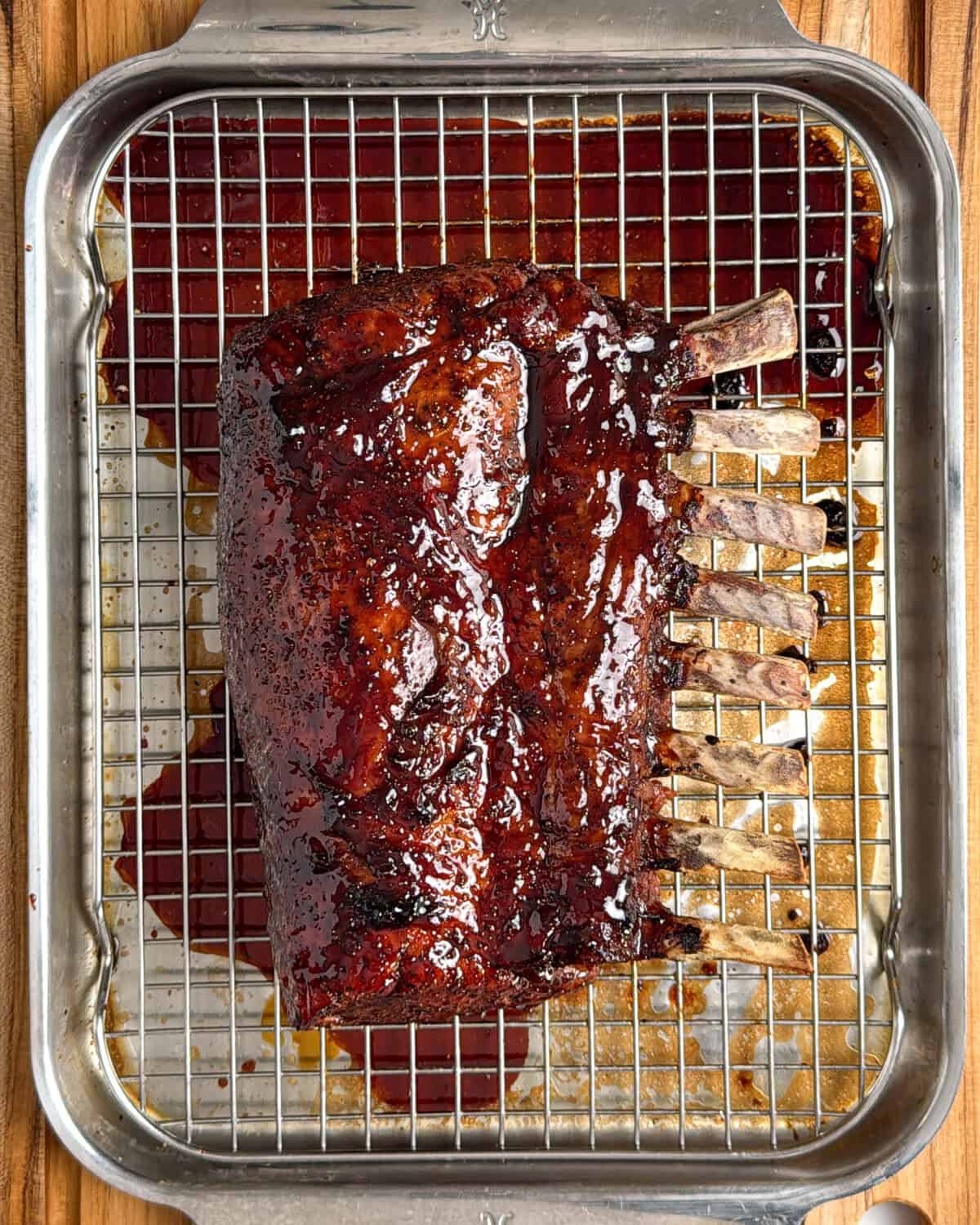
Roast until the internal temperature reaches 140°F to 142°F (60°C to 61°C), then transfer the roast to a cutting board.
Rest and Finish
Tent the pork loosely with foil and rest for 15 to 20 minutes to let the juices redistribute.
Monitor the thermometer during resting to verify that carryover heat brings the centre to at least 145°F (63°C) and holds there for a minimum of 3 minutes. If it stalls below 145°F, return the roast to the oven briefly until it reaches temperature.
Optional, just before serving, brush a very thin layer of the reserved clean glaze over the roast for a fresh, glossy finish.
Carve and Serve
Transfer the glazed rack of pork to a warm serving platter or oval au gratin dish.
Carve straight down between two ribs to slice off one or two individual chops, leaning them against the remaining rack to show off the juicy interior.
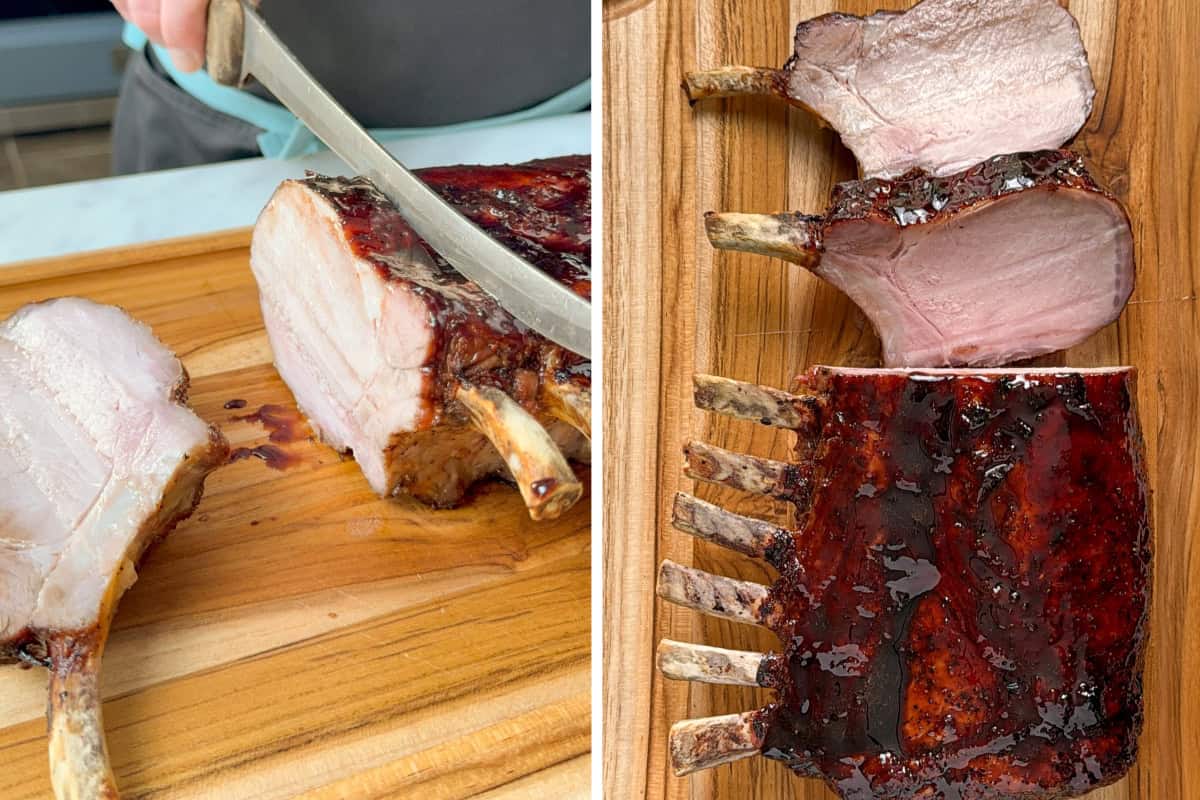
Scatter the pomegranate arils, parsley leaves (optional), and thyme leaves sparingly around the base of the roast so the glossy glaze stays visible.
Serve the warm shallot and thyme jus on the side in a sauceboat, or spoon a pool of jus onto each warm plate and set a pork chop right over top.
Tips & Substitutions
- Internal Temperature & Food Safety (USDA vs. Health Canada): This recipe targets a final internal temperature of 145°F (63°C) followed by a 3-minute rest, matching USDA guidelines for whole cuts of pork and keeping the loin tender and faintly rosy. Health Canada recommends cooking pork to 160°F (71°C). If you prefer 160°F (71°C), keep the roast in the oven until the centre reaches 155°F to 157°F (68°C to 69°C) before resting.
- Boosting Store-Bought Chicken Stock: Homemade stock naturally turns silky as it reduces, while store-bought stock lacks gelatin. To give store-bought stock restaurant-style body without thickening it like gravy, sprinkle 1 teaspoon (3 g) unflavoured powdered gelatin over 1 tablespoon (15 mL) cold water and let it bloom for 5 to 10 minutes. Whisk the bloomed gelatin into the hot, strained jus before finishing with the cold butter.
- Choosing Pomegranate Molasses: Look for a bottle made solely or primarily from reduced pomegranate juice without corn syrup. Brands vary widely in tartness and sweetness, so always taste your glaze and adjust with a touch more honey if overly sharp, or a few drops of red wine vinegar if too sweet.
- Protecting the Glaze: Only start glazing once the pork reaches 115°F (46°C), and always use thin coats. Putting a sugar-rich glaze on at 450°F (230°C) at the start of roasting will scorch the outside long before the centre cooks.
- Make-Ahead Timeline: Roast the garlic up to 2 days ahead, make the pomegranate glaze up to 3 days ahead, and reduce and strain the shallot jus up to 2 days ahead (stopping before whisking in the final cold butter). Store each in airtight containers in the fridge and warm gently before using.
- Substitutions:
- No Aleppo pepper? Use ½ teaspoon crushed red pepper flakes + 1 teaspoon sweet paprika.
- No shallots? Substitute ½ cup finely diced yellow or sweet onion.
- Alcohol-free jus: Replace the dry white wine with an extra ⅓ cup (75 mL) chicken stock plus 1 teaspoon white wine vinegar or lemon juice added during reduction.
Serving Suggestions
- Starches to catch the jus: Creamy garlic mashed potatoes, crispy smashed baby potatoes, or a wild rice pilaf.
- Bright vegetables: Roasted asparagus, charred broccolini, or green beans with lemon zest and toasted almonds.
- Fresh salad: A bitter greens salad with radicchio, shaved fennel, and a light vinaigrette to balance the rich glaze.
- For the table: Warm crusty sourdough or dinner rolls for swiping through the extra shallot and thyme jus.
- Wine pairings: Pinot Noir, Gamay, or an off-dry Riesling.
📖 Recipe
Pomegranate Glazed Rack of Pork with Shallot Jus
Ingredients
➡️Note on Scaling the Recipe: When scaling to 2X or 3X, the light grey ingredient notes and the instructions remain unchanged. Please adjust as needed.
Pork Roast
- 1 French-cut bone-in pork rib roast 6 lb (2.75 kg)
- 1 tablespoon + 1 teaspoon fine sea salt 22 g
- 1½ teaspoon freshly ground black pepper
- 1 tablespoon extra-virgin olive oil 15 mL
- 4 sprigs fresh thyme
Pomegranate & Aleppo Pepper Glaze
- 1 cup unsweetened pomegranate juice 250 mL
- ¼ cup pomegranate molasses, preferably without added sugar 60 mL
- 2 tablespoon honey 30 mL
- 1 tablespoon red wine vinegar, divided 15 mL
- 1½ teaspoon Aleppo pepper
- 3 cloves roasted garlic mashed into a smooth paste (from 1 small head of garlic; see step 2 in Instructions below.)
- 2 sprigs fresh thyme
- ¼ teaspoon fine sea salt or to taste
Shallot & Thyme Jus
- 1 tablespoon unsalted butter 14 g
- 2 medium shallots finely chopped (about ½ cup / 75 g)
- ⅓ cup dry white wine 75 mL
- 3 cups unsalted or low-sodium chicken stock 750 mL
- 3 sprigs fresh thyme
- 1 small bay leaf
- 1 tablespoon cold unsalted butter, to finish 14 g
- Fine sea salt and freshly ground black pepper to taste
- ½ to 1 teaspoon white wine vinegar only if needed
Garnish
- ¼ cup fresh pomegranate arils 45 g
- Small fresh flat-leaf parsley leaves
- Fresh thyme leaves
Instructions
Dry-Brine the Pork (12 to 24 Hours Ahead)
- Pat the pork thoroughly dry with paper towels. Combine the fine sea salt and black pepper in a small bowl, then season the roast evenly on all sides, concentrating on the meat and fat cap.
- Place the pork bone-side down on a wire rack set over a rimmed baking sheet. Refrigerate uncovered for 12 to 24 hours.
Roast the Garlic
- Preheat the oven to 375°F (190°C).
- Slice the top quarter off a small head of garlic to expose the cloves, drizzle lightly with olive oil, and wrap tightly in foil. Roast for 35 to 45 minutes, until the cloves are soft and golden.
- Let cool slightly, then squeeze out 3 cloves and mash them into a smooth paste. (Save the remaining roasted cloves for spreading on bread or stirring into mashed potatoes.)
Prepare the Pomegranate Glaze
- Combine the pomegranate juice and thyme sprigs in a small saucepan. Bring to a gentle simmer over medium heat and reduce by half, about 12 to 18 minutes.
- Remove and discard the thyme sprigs.
- Whisk in the pomegranate molasses, honey, 2 teaspoon of the red wine vinegar, Aleppo pepper, roasted garlic paste, and salt.
- Simmer gently for 3 to 5 minutes, stirring frequently, until glossy and lightly syrupy. Taste and add the remaining 1 teaspoon of red wine vinegar if needed to balance the sweetness.
- Reserve 3 tablespoon of the glaze in a separate clean container for brushing at the very end. Keep the remaining glaze nearby for basting during roasting.
Prepare the Shallot & Thyme Jus
- Start the jus as soon as the pork goes into the oven so it reduces while the roast cooks.
- Melt 1 tablespoon of the butter in a medium saucepan over medium heat. Add the shallots and cook for 5 to 7 minutes, stirring occasionally, until softened and lightly golden.
- Pour in the dry white wine and simmer until nearly evaporated, leaving just a splash in the pan.
- Add the chicken stock, thyme sprigs, and bay leaf. Bring to a gentle simmer and reduce by more than half, about 30 to 45 minutes.
- Strain through a fine-mesh sieve into a clean saucepan, pressing gently on the shallots before discarding the solids. Cover and set aside until the pork is resting.
- Just before serving, reheat the jus gently over low heat. Taste and season with salt and freshly ground black pepper, adding the white wine vinegar only if you want a touch more brightness.
- Remove from the heat and whisk in the remaining 1 tablespoon of cold butter until glossy and emulsified. Serve warm.
Roast the Pork: Initial Browning
- Remove the pork from the refrigerator about 30 minutes before roasting to take the chill off.
- Preheat the oven to 450°F (230°C).
- Rub the exposed meat lightly with olive oil. Place the roast bone-side down, fat-side up, on a rack in a roasting pan, tucking the thyme sprigs underneath the meat.
- Insert a leave-in digital thermometer into the thickest part of the loin, making sure the tip does not touch a bone. Or plan to check with an instant-read thermometer.
- Roast uncovered for 15 minutes, until the fat cap begins to render and turns golden. If the exposed rib bone tips begin darkening too quickly, wrap them loosely in small strips of foil.
Continue Roasting at Lower Heat
- Reduce the oven temperature to 325°F (165°C) without opening the door or removing the pork.
- Continue roasting until the internal temperature reaches 115°F (46°C), roughly 45 to 65 minutes depending on the thickness of your roast and your oven. Rely on your thermometer rather than the clock.
Build the Pomegranate Glaze
- Once the centre reaches 115°F (46°C), increase the oven temperature to 375°F (190°C).
- Brush a thin, even layer of warm pomegranate glaze over the meat and fat cap, avoiding the exposed bones.
- Return the roast to the oven for 8 minutes, then brush on a second thin layer of glaze.
- Continue roasting, applying a third thin coat if colour and internal temperature allow. If the glaze begins to darken too quickly, lower the oven temperature to 350°F (175°C).
- Roast until the internal temperature reaches 140°F to 142°F (60°C to 61°C), then transfer the roast to a cutting board.
Rest and Finish
- Tent the pork loosely with foil and rest for 15 to 20 minutes to let the juices redistribute.
- Monitor the thermometer during resting to verify that carryover heat brings the centre to at least 145°F (63°C) and holds there for a minimum of 3 minutes. If it stalls below 145°F, return the roast to the oven briefly until it reaches temperature.
- Optional: just before serving, brush a very thin layer of the reserved clean glaze over the roast for a fresh, glossy finish.
Carve and Serve
- Transfer the glazed rack of pork to a warm serving platter or oval au gratin dish.
- Carve straight down between two ribs to slice off one or two individual chops, leaning them against the remaining rack to show off the juicy interior.
- Scatter the pomegranate arils, parsley leaves (optional), and thyme leaves sparingly around the base of the roast so the glossy glaze stays visible.
- Serve the warm shallot and thyme jus on the side in a sauceboat, or spoon a pool of jus onto each warm plate and set a pork chop right over top.
💬Tried this Recipe?
- We'd really appreciate a rating and a quick review! It helps home cooks and we love hearing what you think.
Notes
Tips & Substitutions
- Internal Temperature & Food Safety (USDA vs. Health Canada): This recipe targets a final internal temperature of 145°F (63°C) followed by a 3-minute rest, matching USDA guidelines for whole cuts of pork and keeping the loin tender and faintly rosy. Health Canada recommends cooking pork to 160°F (71°C). If you prefer 160°F (71°C), keep the roast in the oven until the centre reaches 155°F to 157°F (68°C to 69°C) before resting.
- Boosting Store-Bought Chicken Stock: Homemade stock naturally turns silky as it reduces, while store-bought stock lacks gelatin. To give store-bought stock restaurant-style body without thickening it like gravy, sprinkle 1 teaspoon (3 g) unflavoured powdered gelatin over 1 tablespoon (15 mL) cold water and let it bloom for 5 to 10 minutes. Whisk the bloomed gelatin into the hot, strained jus before finishing with the cold butter.
- Choosing Pomegranate Molasses: Look for a bottle made solely or primarily from reduced pomegranate juice without corn syrup. Brands vary widely in tartness and sweetness, so always taste your glaze and adjust with a touch more honey if overly sharp, or a few drops of red wine vinegar if too sweet.
- Protecting the Glaze: Only start glazing once the pork reaches 115°F (46°C), and always use thin coats. Putting a sugar-rich glaze on at 450°F (230°C) at the start of roasting will scorch the outside long before the centre cooks.
- Make-Ahead Timeline: Roast the garlic up to 2 days ahead, make the pomegranate glaze up to 3 days ahead, and reduce and strain the shallot jus up to 2 days ahead (stopping before whisking in the final cold butter). Store each in airtight containers in the fridge and warm gently before using.
- Substitutions:
- No Aleppo pepper? Use ½ teaspoon crushed red pepper flakes + 1 teaspoon sweet paprika.
- No shallots? Substitute ½ cup finely diced yellow or sweet onion.
- Alcohol-free jus: Replace the dry white wine with an extra ⅓ cup (75 mL) chicken stock plus 1 teaspoon white wine vinegar or lemon juice added during reduction.
Serving Suggestions
- Starches to catch the jus: Creamy garlic mashed potatoes, crispy smashed baby potatoes, or a wild rice pilaf.
- Bright vegetables: Roasted asparagus, charred broccolini, or green beans with lemon zest and toasted almonds.
- Fresh salad: A bitter greens salad with radicchio, shaved fennel, and a light vinaigrette to balance the rich glaze.
- For the table: Warm crusty sourdough or dinner rolls for swiping through the extra shallot and thyme jus.
- Wine pairings: Pinot Noir, Gamay, or an off-dry Riesling.

Leave a Reply