

Easy Tuscan Turkey with Pan Sauce | Dairy-Free, Gluten-Free. Turkey doesn't have to be complicated. With the right technique, you get golden skin, juicy slices, and clean savoury pan juices without any fuss.
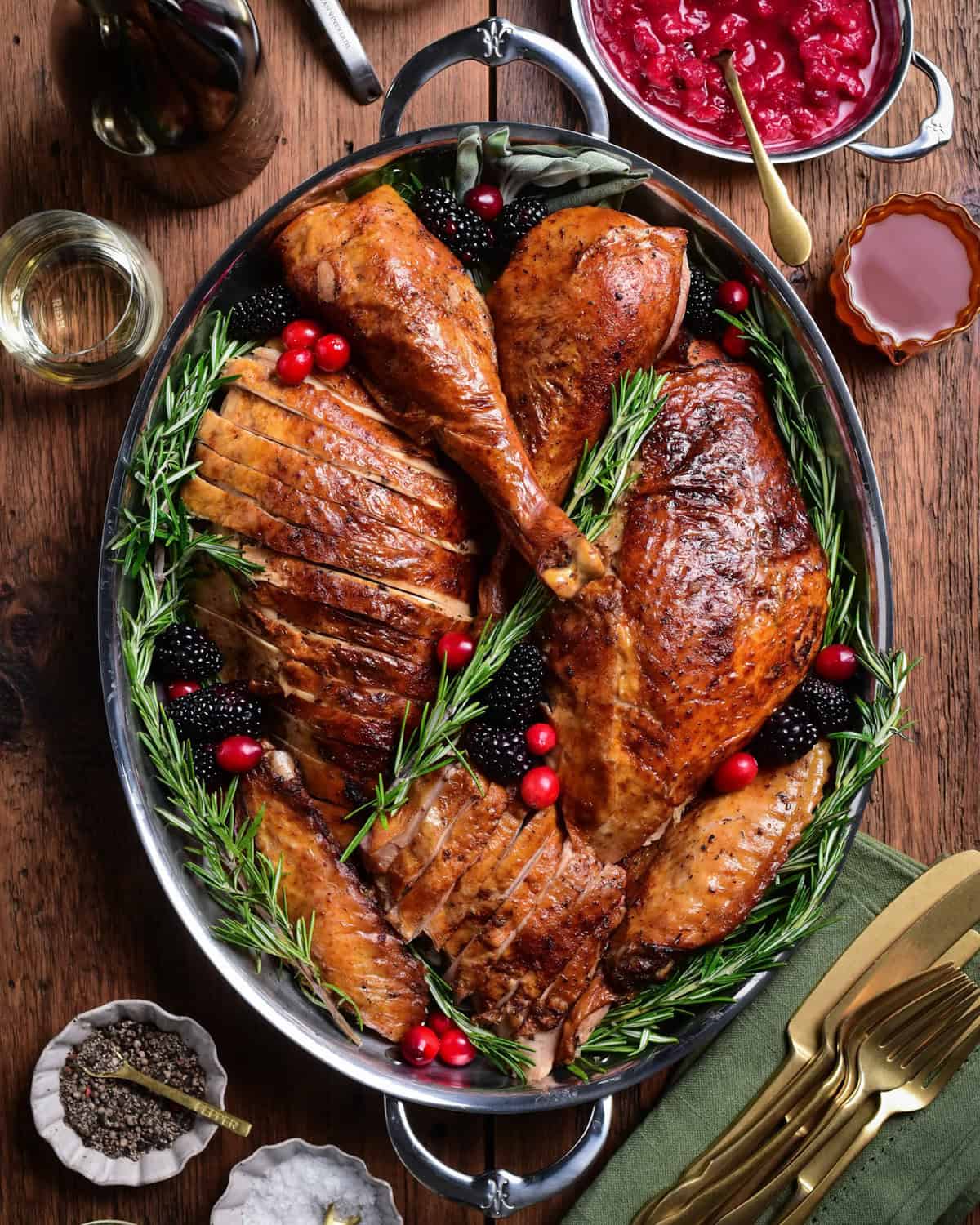
Dry brining (if time allows) seasons the meat beautifully and helps the skin dry out for better browning. Starting the roast at a higher heat sets that gorgeous colour, then lowering the temperature lets the breast stay moist while the dark meat becomes tender.
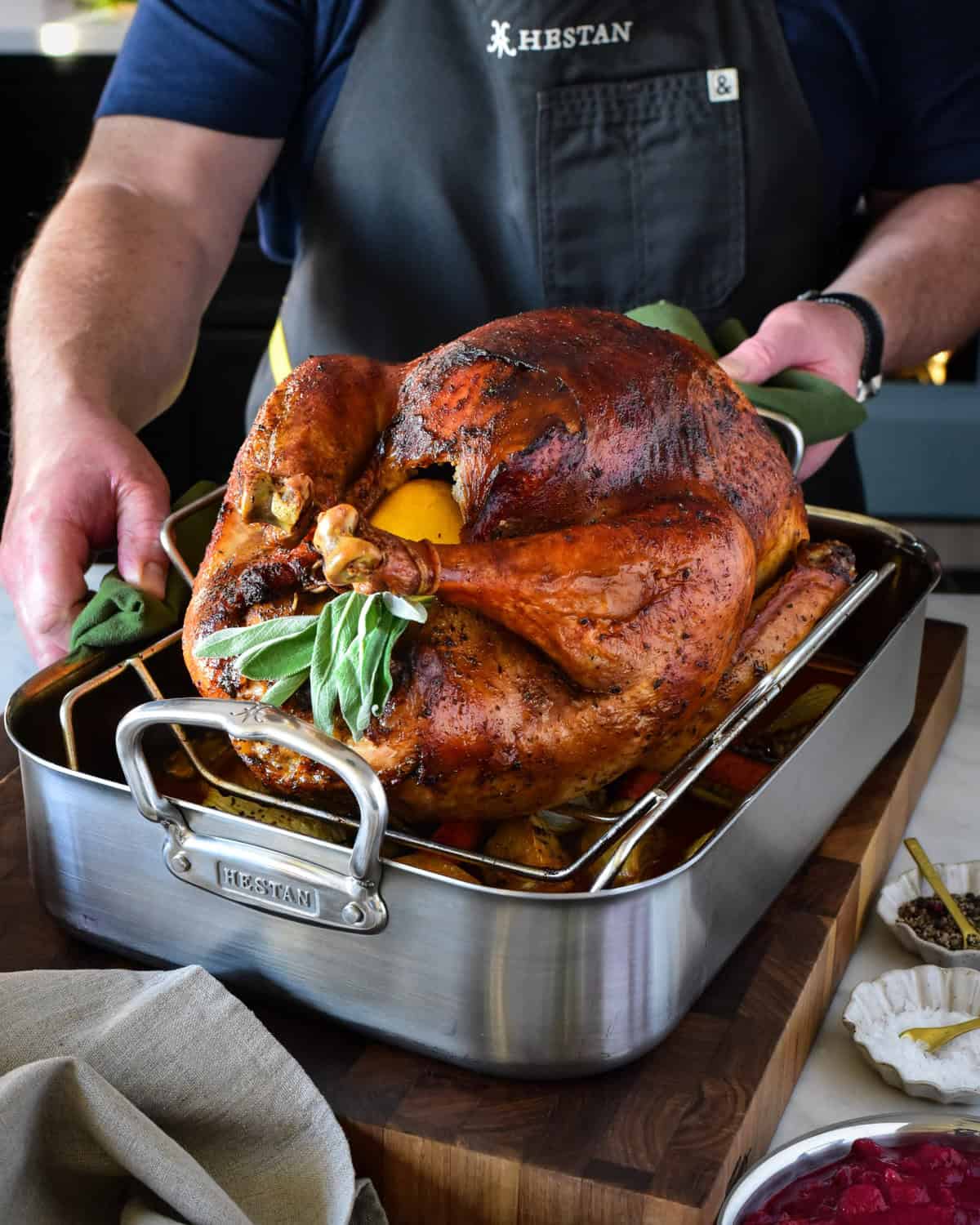
A mix of aromatics and a little liquid in the pan prevents scorching and builds the base for a bright, flavourful pan sauce. When the turkey is done, the breast rests while the legs and thighs finish in the oven, ensuring every part is cooked perfectly. Meanwhile, the pan juices get skimmed, brightened with wine, and reduced into a clean, glossy sauce.
The result is a showpiece Tuscan turkey that's dairy-free, deeply flavourful, and wonderfully textured.
Jump to:
Why We Love This Recipe
- Consistently Juicy Results: The olive oil rub and slow-roast method keep the meat tender from edge to center.
- Golden, Flavourful Skin: Paprika, fresh herbs and lemon zest deepen the colour and add a clean savoury flavour without butter.
- Dairy-Free and Simple: No butter or complicated steps. The olive oil makes this recipe accessible for dairy-free guests.
- Built-In Pan Sauce: The turkey roasts over aromatics and stock, giving you a rich and clean (gluten-free) pan sauce without extra work.
- Why This High-Heat Start Makes Your Slow-Roasted Tuscan Turkey Better: This method follows the same principles used in professional kitchens: dry brining, controlled heat, and moisture management.
Ingredients
Turkey
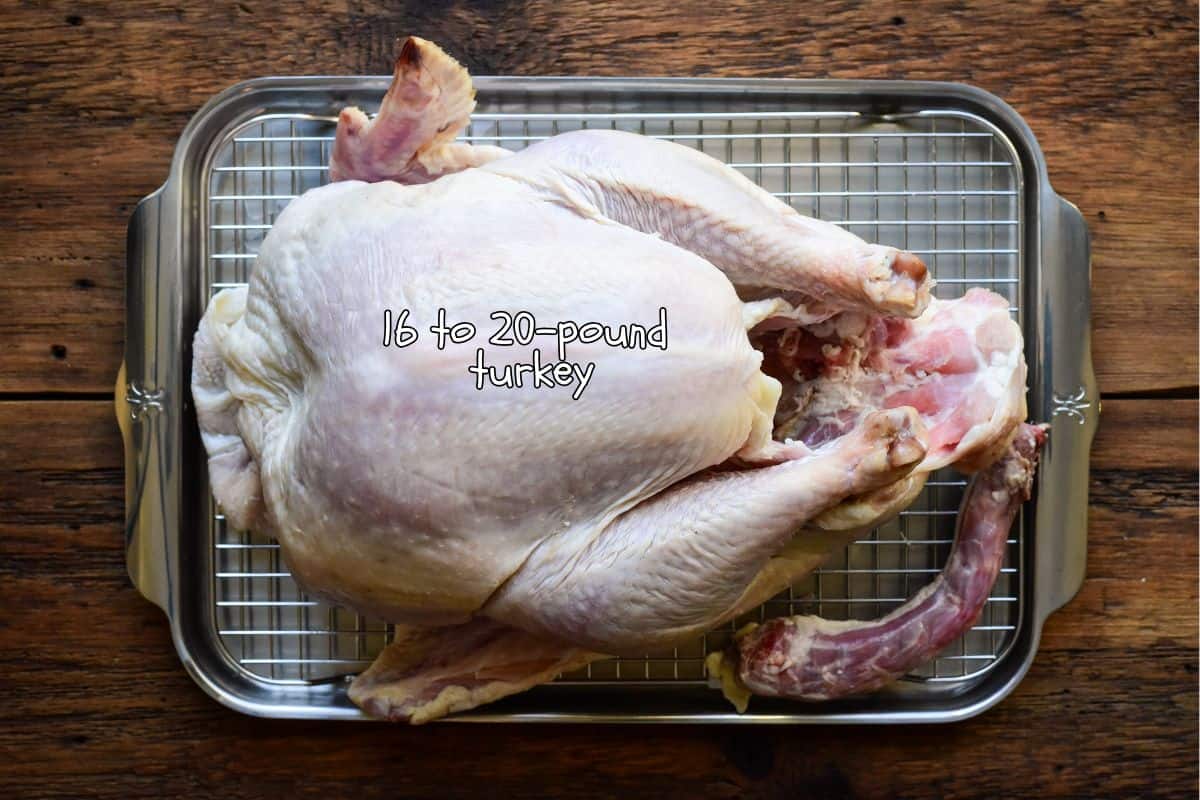
- Turkey
Optional Overnight Dry Brine (Recommended)
- Sea salt
- Black pepper
- Optional: rosemary, thyme, sage, lemon zest
Turkey Herb Rub
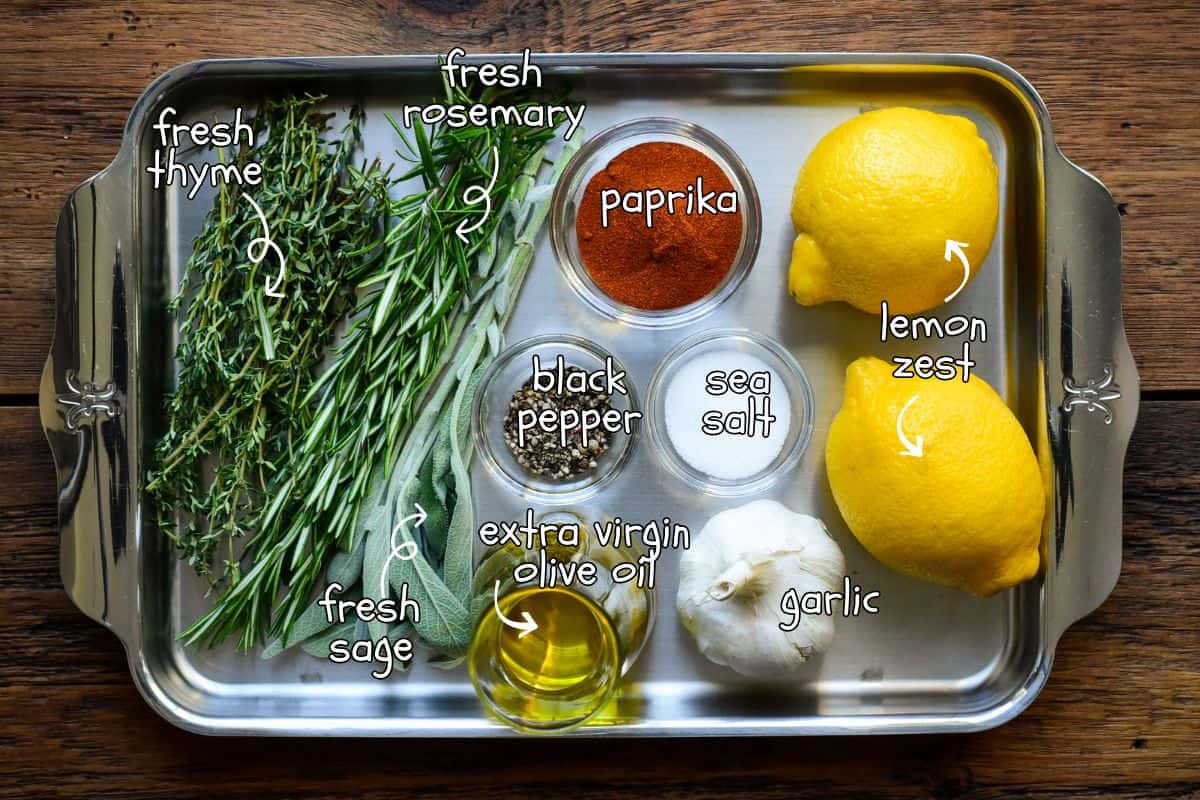
- Extra virgin olive oil
- Paprika
- Garlic
- Fresh rosemary
- Fresh thyme
- Fresh sage
- Lemon zest
- Sea salt
- Black pepper
Pan Aromatics and Liquid
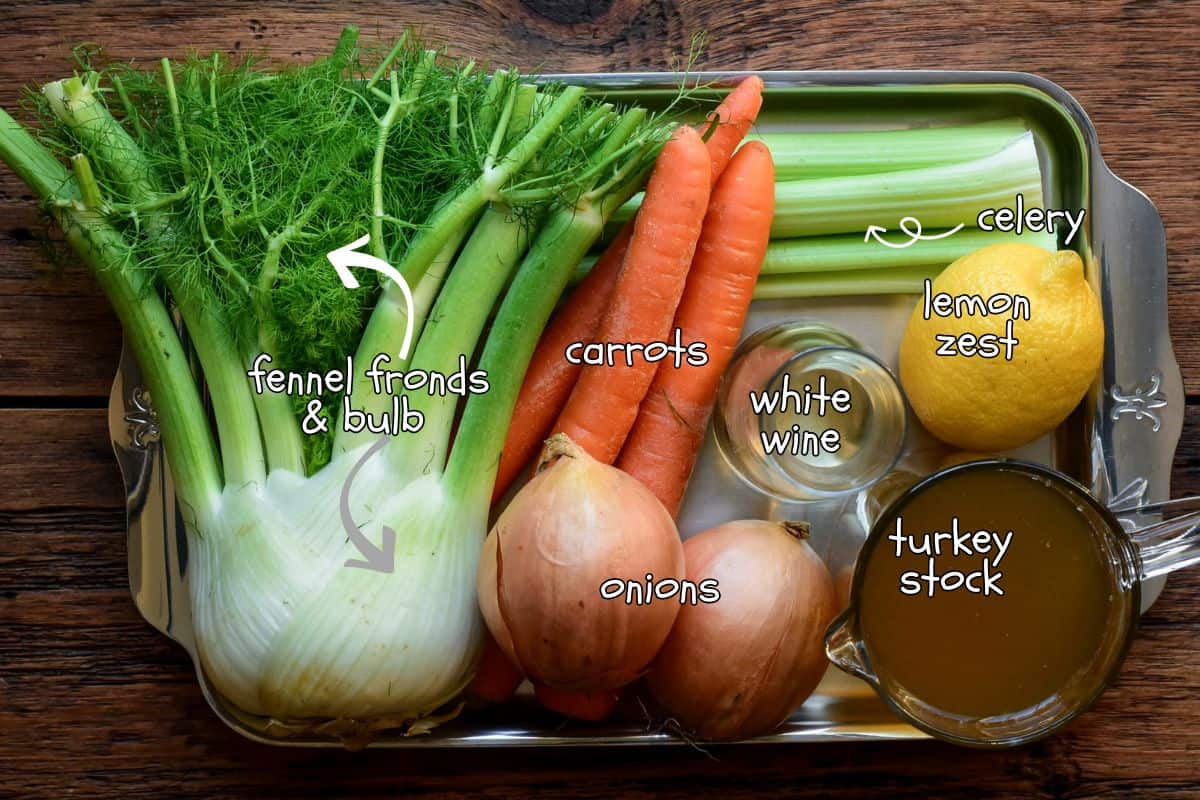
- Onions
- Carrots
- Celery stalks
- Fennel bulb
- Lemon
- Turkey neck and wing tips
- Turkey stock or chicken stock
- White wine
Pan Sauce
- Dry white wine
See the recipe card below for exact quantities.
Instructions
Optional Dry Brine (Recommended)
Pat the turkey dry with paper towels. Season under the skin, inside the turkey cavity and all over the surface with the dry brine mixture. Place the turkey on a rack set inside a sheet pan. Refrigerate uncovered for 12 to 24 hours.
Prepare the Turkey
Pat the turkey dry again. Loosen the skin over the breasts.
Mix all rub ingredients in a bowl. Carefully spread some under the skin and the rest over the entire bird. Tip: You can use your hand or a wooden spoon.
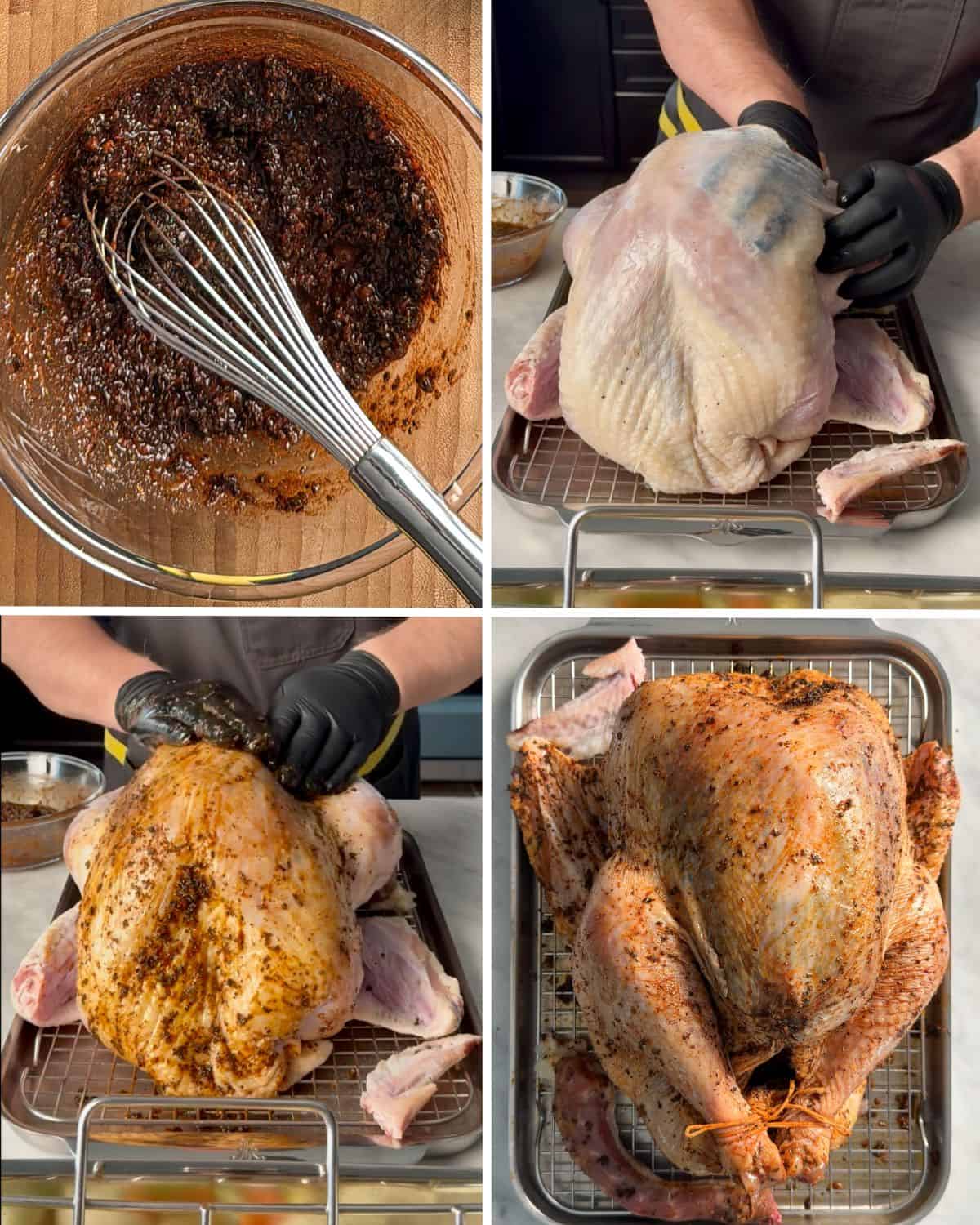
Tie the legs together with kitchen twine and tuck the wing tips under the bird to keep everything compact and help it roast evenly.
Prepare a Large Roasting Pan
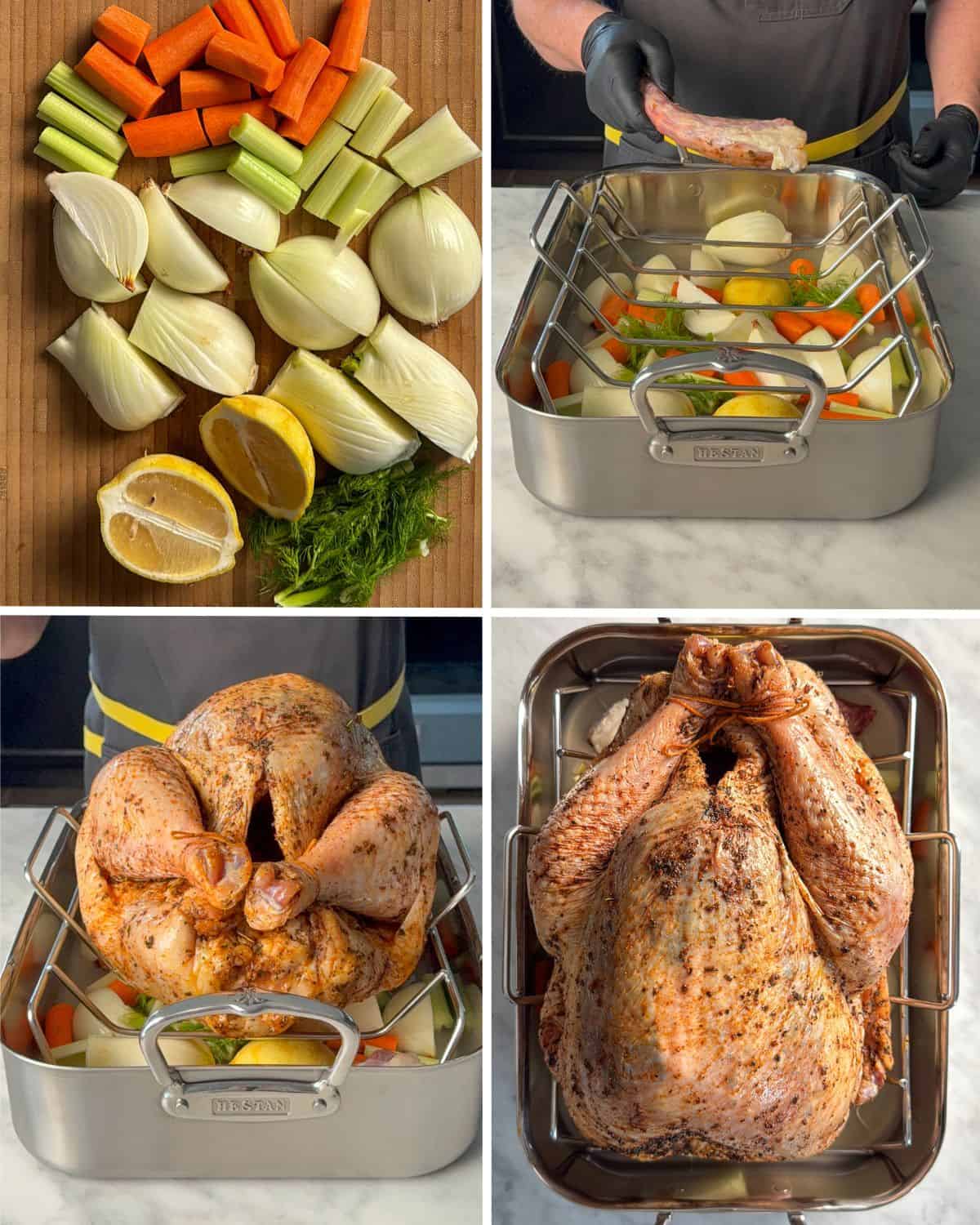
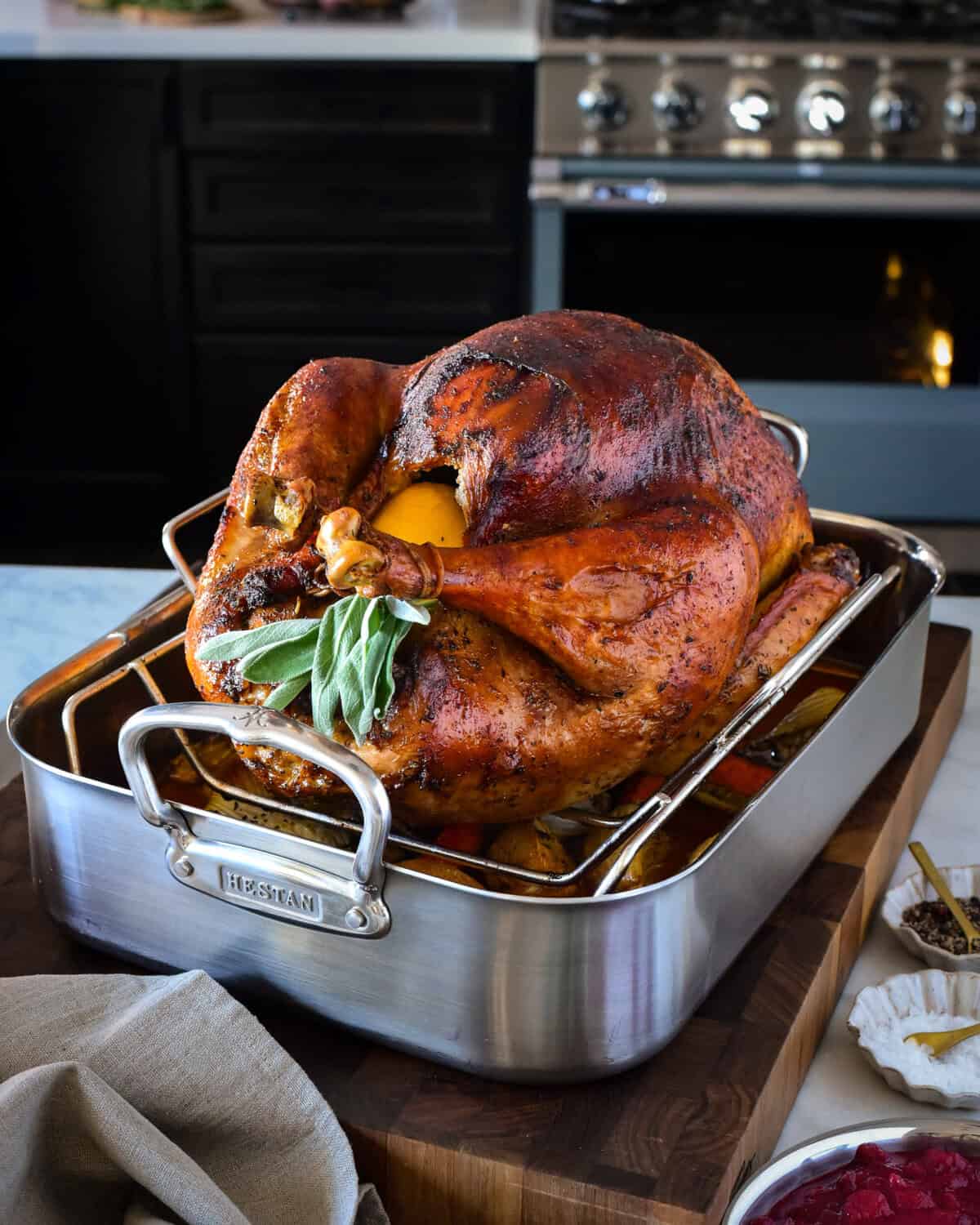
Add the onions, carrots, celery, fennel, lemon halves, turkey neck, wing tips and fennel fronds to the bottom of the roasting pan.
Pour in the stock and wine so the vegetables sit in liquid and do not scorch.
Set a rack over the aromatics and place the turkey on the rack.
High Heat Start
Preheat the oven to 425°F (220°C).
Roast the turkey uncovered for 20 minutes.
Slow Roast
Plan for 3 ½ to 4 ½ hours of total cook time, depending on the turkey and oven. Use temperature as your guide, not time.
Reduce the oven to 325°F (160°C).
Continue roasting until the thickest part of the breast meat reaches 160 to 162°F (68 to 71°C). The turkey breast will continue to cook as it rests, reaching the safe final temperature of 165°F (74°C).
If any part browns too quickly, cover that area with foil. Baste lightly with pan juices every 45 to 60 minutes. If the pan dries out, add a splash of stock.

Rest and Finish Dark Meat
Transfer the turkey to a carving board and rest for 30 minutes.
For extra tender results:
Once the breast reaches 160 to 162°F, remove the legs, thighs and wings. The breast rests while the legs and thighs go back into the oven for a perfect finish.
Place the dark meat on a parchment-lined sheet pan and return to the oven while you prepare the pan sauce. Roast until the dark meat reaches 175 to 180°F (79 to 82°C). This keeps the breast perfectly moist while the legs and thighs become tender and fully cooked.
Make the Pan Sauce
Remove and discard the aromatics, neck, and wing tips from the roaster (or eat them), leaving all the liquid in the pan.
Tilt the pan and skim the top layer of fat. Alternatively, carefully pour the liquid into a large heatproof measuring cup, let the fat rise to the top and pour it off. You do not need to remove every trace, only the heavy layer of fat.
Place the roaster over medium heat. Add the white wine and scrape up the browned bits. Bring it to a lively simmer and reduce by about one third.
Pour the reduced liquid through a fine strainer into a saucepan or serving vessel.
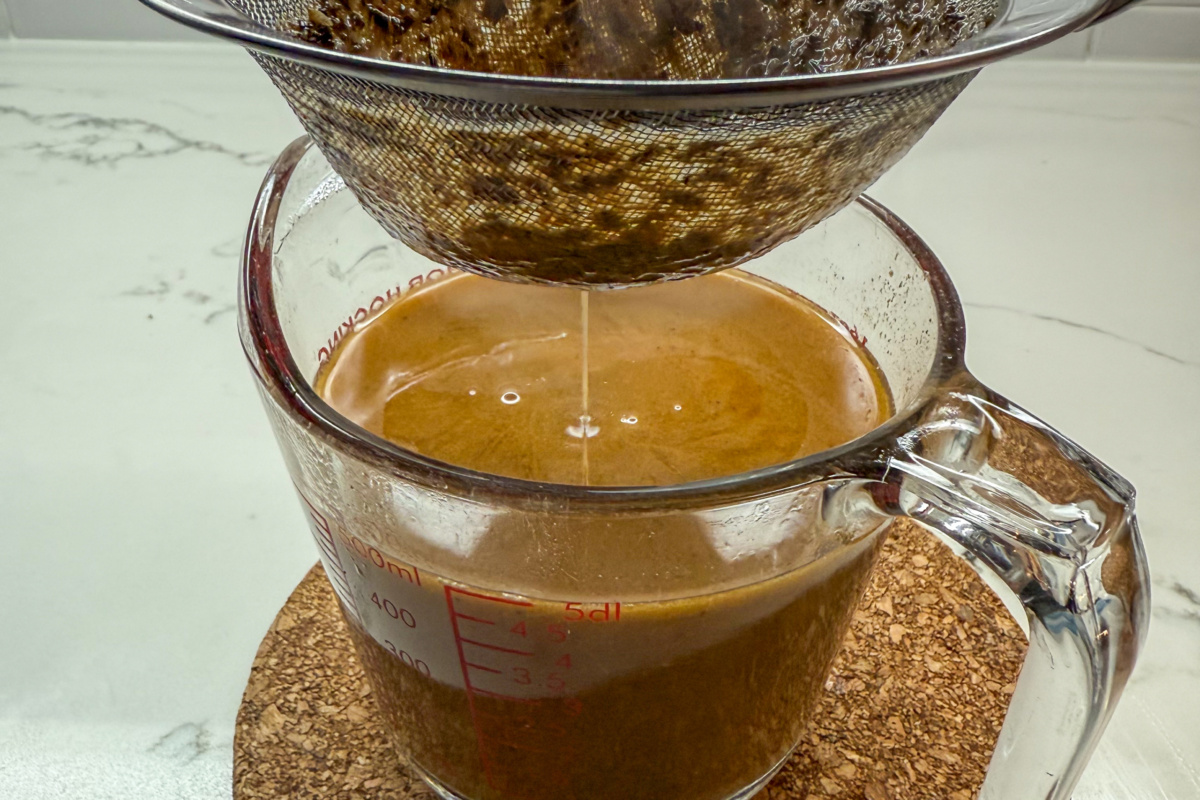
Taste for balance. A small splash of wine or a squeeze of lemon can brighten it, depending on preference.
Slice & Garnish
Slice the turkey, see How to Carve a Turkey Like a Pro
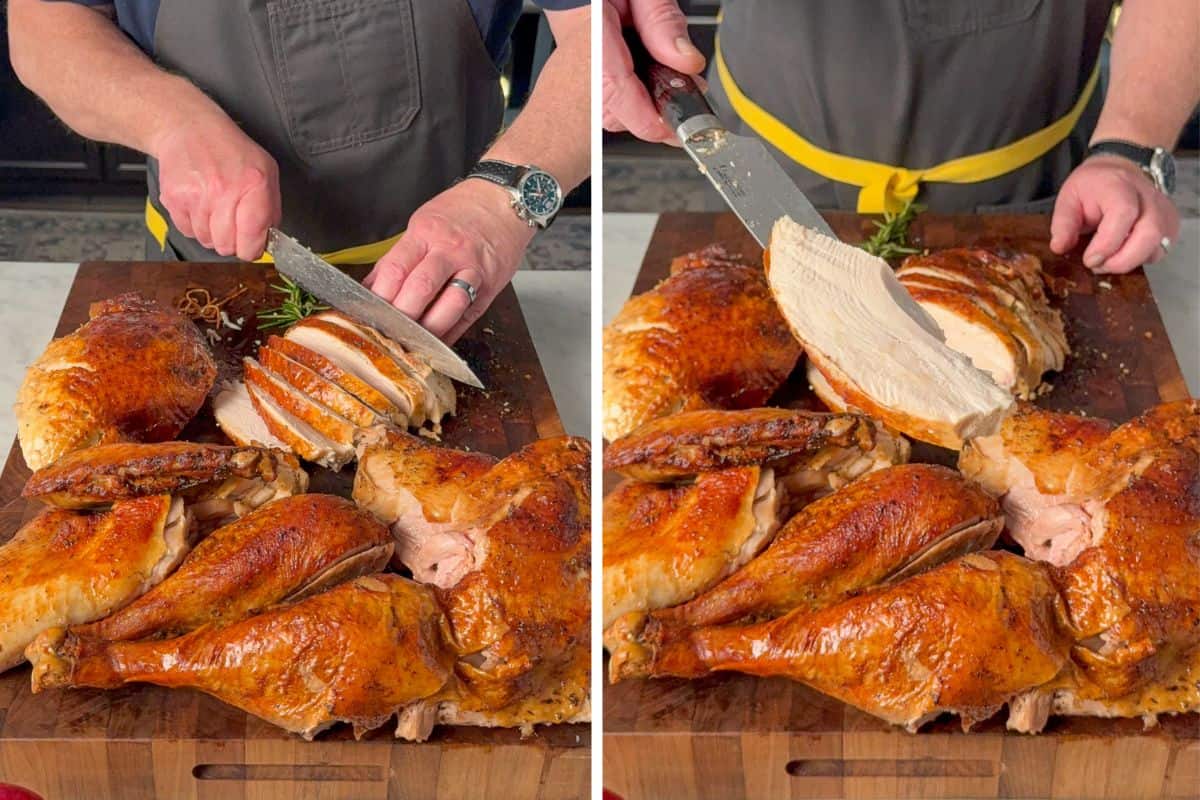
Fan breast slices on a platter and add thighs, drumsticks and wings around them.
Garnish with a variety of herbs; use sprigs of rosemary, thyme, or sage. Add seasonal fruits like cranberries, pomegranate arils or grapes. You can also add citrus slices or wedges of lemon, orange or clementines.
Arrange turkey slices in a fan, layer garnishes, and add height for a bountiful look.
Serving Suggestions
Serve the Tuscan turkey with the warm pan sauce and cranberry sauce on the side. Pair with mashed or roasted potatoes, vegetables, a simple salad and bread if anyone wants to make a sandwich!
Tips & Substitutions
Tips for Success
- Dry brine if possible: This step seasons the meat deeply and promotes crisp skin.
- Start hot, finish low: The high-heat start sets colour and texture. The gentle heat ensures juicy meat.
- Use a rack: Airflow around the turkey helps crisp the skin and prevents steaming.
- Don't over-baste: A light spooning of pan juices is enough. Too much can soften the skin.
- Use a meat thermometer: Rather than going by time. The breast is perfect at 160 to 162°F. Resting will bring it to a safe temperature 165°F.
Substitutions
- Olive Oil: Replace with avocado oil.
- Fresh Herbs: Use dried herbs at one third the amount.
- White Wine: Replace with extra stock.
- Fennel: Swap with more onion and celery.
How to Carve a Turkey Like a Pro
Tools You'll Need
- Sharp carving knife or chef's knife
- Cutting board with a juice groove
- Carving fork (optional)
- Serving platter
| Step | What to Do | Why It Matters |
|---|---|---|
| 1. Rest the Turkey | Let it rest 20 to 30 minutes before carving. | Resting keeps juices inside the meat instead of spilling onto the board. |
| 2. Set Up Your Board | Use a large cutting board with a juice groove. Place a towel under the board to prevent slipping. | Creates a stable, safe carving surface. |
| 3. Remove the Legs & Thighs | Pull each leg outward, slice through the skin, then cut at the joint to remove the whole leg quarter. | Separating dark meat first makes the breast easier to carve cleanly. |
| 4. Separate Drumstick & Thigh | Slice between the drumstick and thigh joint. | Makes serving easier and more portion-friendly. |
| 5. Remove the Wings | Pull each wing away from the body and cut through the joint. | Clears space for removing the breast in large sections. |
| 6. Remove the Breast Lobes | Slice down one side of the breastbone and follow it closely, easing the breast off in one piece. Repeat on the other side. | Gives you large, clean pieces that are easy to slice evenly. |
| 7. Slice the Breast | Place each breast lobe skin-side up and cut across the grain into even slices. | Keeps slices tender, juicy and uniform. |
| 8. Arrange for Serving | Fan breast slices on a platter and add thighs, drumsticks and wings around them. Serve with warm pan sauce. | Creates a beautiful, easy-to-serve presentation. |
Extra Chef Carving Tips
- Keep a (clean) tea towel nearby to stabilize the turkey while carving. A towel gives you better grip and stability while carving the turkey. It keeps the bird from slipping, protects your hand, and makes carving safer and easier.
- Use long, smooth strokes rather than sawing motions.
Storing Leftover Tuscan Turkey
- Cool First: Let the turkey cool to room temperature for no more than 2 hours after carving.
- Store in the Fridge: Slice or shred the meat. Place in airtight containers or tightly wrapped in foil or plastic wrap. Refrigerated turkey lasts 3 to 4 days.
- Freeze for Longer Storage: Portion meat into freezer-safe bags or containers. Remove as much air as possible to prevent freezer burn. Frozen turkey is best used within 2 to 6 months.
- Reheating Tips: Reheat gently in the oven at 325°F (160°C) with a splash of stock or pan juices to prevent drying. For microwave reheating, cover loosely and heat in short intervals, stirring or flipping halfway.
- Using Leftovers: Make sandwiches, salads, soups, pasta dishes, or tacos. Dark meat works especially well in recipes that need tender, juicy pieces.
FAQ’s
A: Starting the roast at a higher heat for the first twenty minutes is an excellent idea for this style of turkey. It improves browning without drying the meat and works especially well when the bird has been air dried in the fridge or rubbed with olive oil, herbs and paprika.
Here is why it helps:
Faster skin dehydration: The higher heat pulls surface moisture off the skin quickly, which sets the texture and encourages even colour later in the cook.
Better Maillard reaction: The jump in temperature gives the skin an early boost of colour. Since the turkey then settles into a gentle roast, the skin does not burn.
Improved fat rendering: The initial heat helps begin the rendering of the fat pockets under the skin, which allows the later slow roast to crisp the skin more evenly.
No risk to the meat: Because the bird is large and the higher heat stage is short, the meat does not cook too quickly or tighten.
A: Breast: Pull from the oven at 160 to 162°F (68 to 71°C). Resting brings it to the safe USDA-recommended 165°F (74°C).
Cooking the breast to 165°F directly in the oven often dries it out. Resting allows it to reach a safe temperature while staying juicy.
Dark meat (legs and thighs): Roast to 175 to 180°F (79 to 82°C) to ensure tenderness and full cooking.
Dark meat has more connective tissue. Cooking it to 175-180°F ensures it becomes tender and flavourful without overcooking the breast.
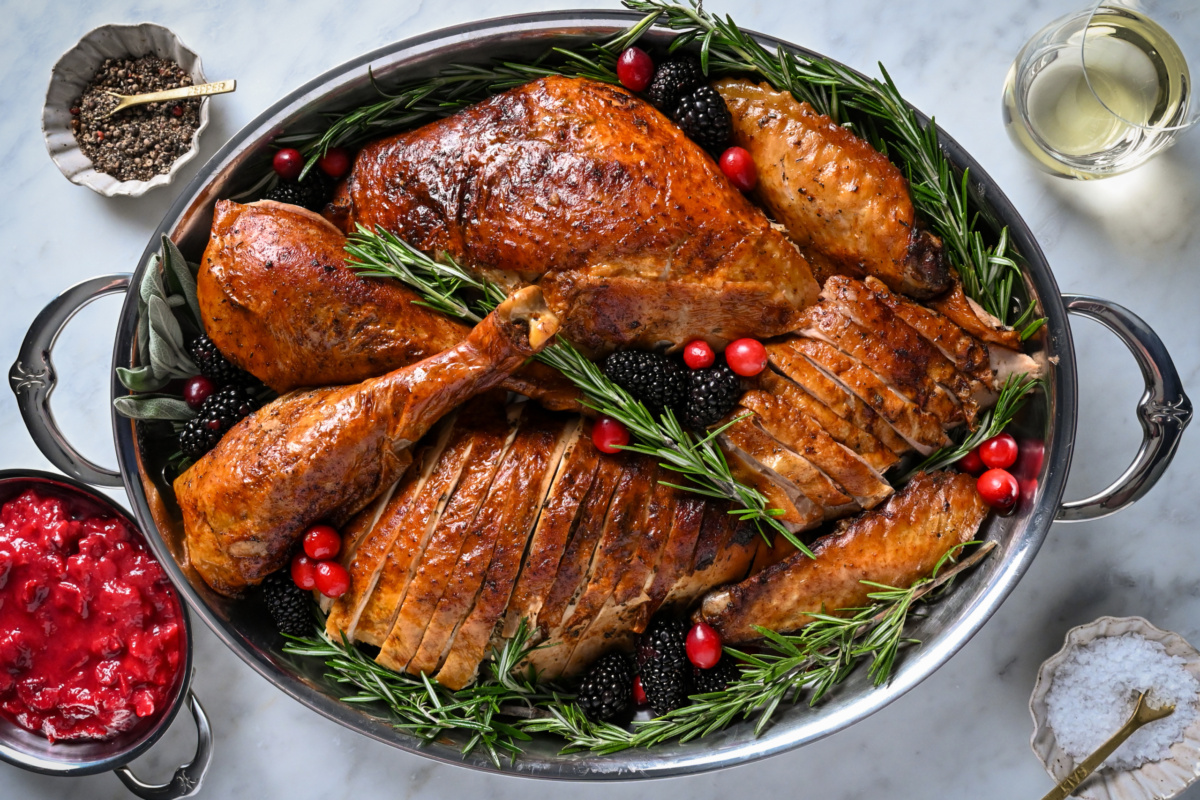
Equipment Used: This Tuscan Turkey recipe was made in collaboration with Hestan Culinary using the Provisions Large (16.5") Roaster with Rack and served in the Provisions Stainless Steel Oval Au Gratin Dish. All opinions in this post are our own.
📖 Recipe
Easy Tuscan Turkey with Pan Sauce | Dairy Free, Gluten Free
Ingredients
Turkey
- 1 16 to 20-pound turkey
Optional Overnight Dry Brine (Recommended)
- 8 to 12 teaspoon sea salt
- 1 pinch black pepper
- Optional: finely chopped rosemary thyme, sage, lemon zest
Turkey Herb Rub
- ½ cup extra virgin olive oil
- 2 tablespoon paprika sweet or smoked
- 4 cloves garlic minced
- 2 tablespoon fresh rosemary finely chopped
- 2 tablespoon fresh thyme finely chopped
- 1 tablespoon fresh sage finely chopped
- 2 lemons, zest
- 2 teaspoon sea salt If using the dry brine, reduce the salt in the rub by 1 tsp.
- 1 teaspoon freshly cracked black pepper
Pan Aromatics and Liquid
- 2 onions quartered
- 3 carrots cut into chunks
- 3 celery stalks cut into chunks
- 1 fennel bulb and fronds bulb quartered (the stalks are not required)
- 1 zested lemon halved
- Turkey neck and wing tips
- 2 cups turkey stock or low-sodium chicken stock plus 1 cup more if needed (Gluten Free if needed)
- ½ cup white wine
Pan Sauce
- 1 cup dry white wine
Instructions
Optional Dry Brine (Recommended)
- Pat the turkey dry with paper towels. Season under the skin, inside the turkey cavity and all over the surface with the dry brine mixture. Place the turkey on a rack set inside a sheet pan. Refrigerate uncovered for 12 to 24 hours.
Prepare the Turkey
- Pat the turkey dry again. Loosen the skin over the breasts.
- Mix all rub ingredients in a bowl. Carefully spread some under the skin and the rest over the entire bird. Tip: You can use your hand or a wooden spoon.
- Tie the legs together with kitchen twine and tuck the wing tips under the bird to keep everything compact and help it roast evenly.
Prepare a Large Roasting Pan
- Add the onions, carrots, celery, fennel, lemon halves, turkey neck, wing tips and fennel fronds to the bottom of the roasting pan.
- Pour in the stock and wine so the vegetables sit in liquid and do not scorch.
- Set a rack over the aromatics and place the turkey on the rack.
High Heat Start
- Preheat the oven to 425°F (220°C).
- Roast the turkey uncovered for 20 minutes.
Slow Roast
- Plan for 3 ½ to 4 ½ hours of total cook time, depending on the turkey and oven. Use temperature as your guide, not time.
- Reduce the oven to 325°F (160°C).
- Continue roasting until the thickest part of the breast meat reaches 160 to 162°F (68 to 71°C). The turkey breast will continue to cook as it rests, reaching the safe final temperature of 165°F (74°C).
- If any part browns too quickly, cover that area with foil. Baste lightly with pan juices every 45 to 60 minutes. If the pan dries out, add a splash of stock.
Rest and Finish Dark Meat
- Transfer the turkey to a carving board and rest for 30 minutes.
- For extra tender results:Once the breast reaches 160 to 162°F, remove the legs, thighs and wings. The breast rests while the legs and thighs go back into the oven for a perfect finish.
- Place the dark meat on a parchment-lined sheet pan and return to the oven while you prepare the pan sauce. Roast until the dark meat reaches 175 to 180°F (79 to 82°C). This keeps the breast perfectly moist while the legs and thighs become tender and fully cooked.
Make the Pan Sauce
- Remove and discard the aromatics, neck, and wing tips from the roaster (or eat them), leaving all the liquid in the pan.
- Tilt the pan and skim the top layer of fat. Alternatively, carefully pour the liquid into a large heatproof measuring cup, let the fat rise to the top and pour it off. You do not need to remove every trace, only the heavy layer of fat.
- Place the roaster over medium heat. Add the white wine and scrape up the browned bits. Bring it to a lively simmer and reduce by about one third.
- Pour the reduced liquid through a fine strainer into a saucepan or serving vessel.
- Taste for balance. A small splash of wine or a squeeze of lemon can brighten it, depending on preference.
Slice & Garnish
- Slice the turkey, see How to Carve a Turkey Like a Pro
- Garnish with a variety of herbs; use sprigs of rosemary, thyme, or sage. Add seasonal fruits like cranberries, pomegranate arils or grapes. You can also add citrus slices or wedges of lemon, orange or clementines.
- Arrange turkey slices in a fan, layer garnishes, and add height for a bountiful look.
Serving Suggestions
- Serve the turkey with the warm pan sauce and cranberry sauce on the side. Pair with mashed or roasted potatoes, vegetables, a simple salad and bread if anyone wants to make a sandwich!
💬Tried this recipe?
- We'd LOVE it if you left a rating and review. Your feedback helps others… and it would really make our day!


Leave a Reply