

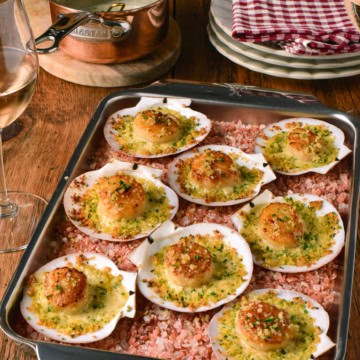
The deep, rich crunch of a golden-brown Gruyère breadcrumb crust gives way to plump, sweet sea scallops bathed in a silky, pan-reduced white wine cream sauce. Inspired by traditional French Coquilles Saint-Jacques gratinées, this version strips away heavy flour paste and overpowering potato borders to showcase what truly matters: perfectly seared, tender scallops.
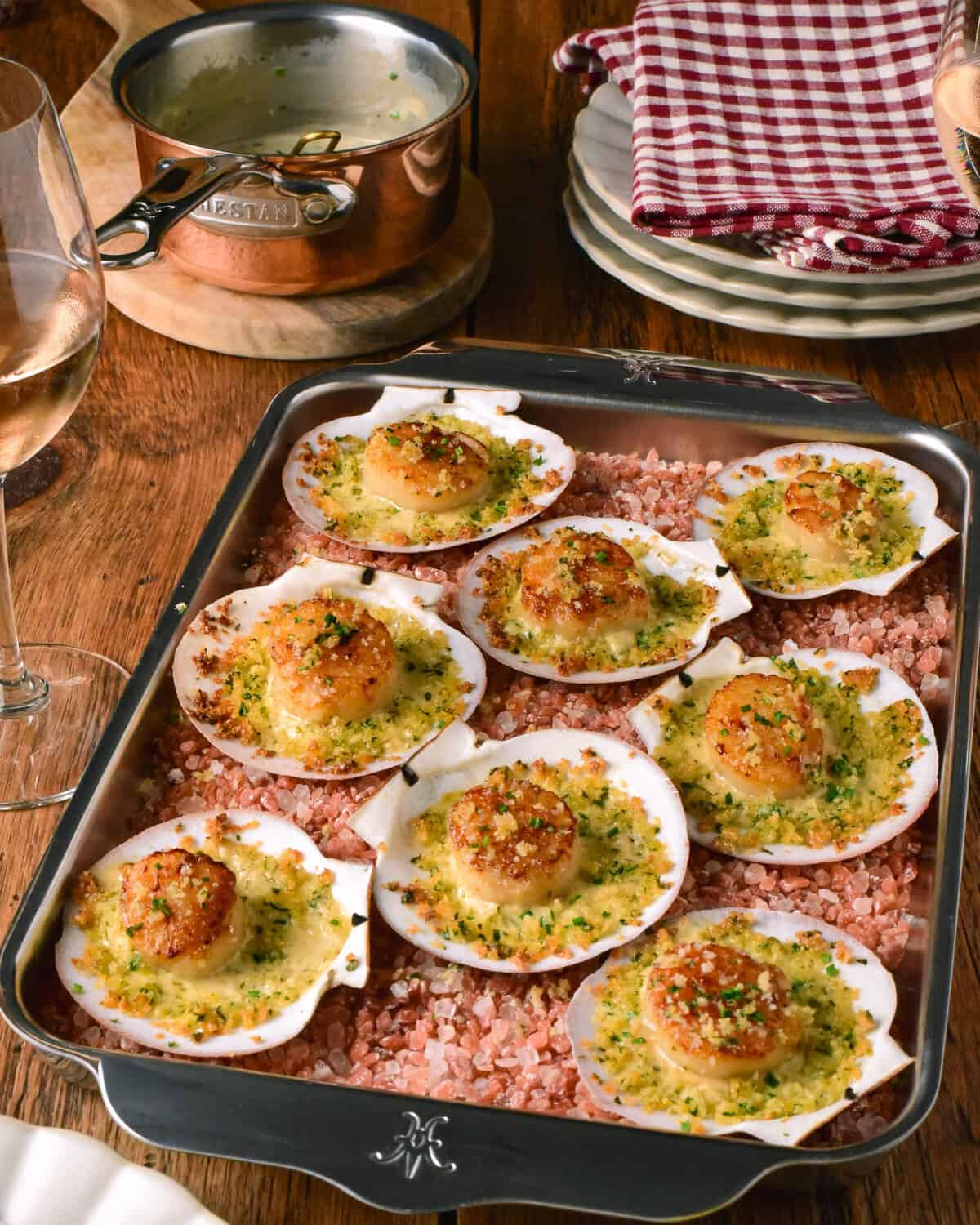
When hosting or cooking for a special occasion, you want a dish that feels sophisticated without pinning you to the stove all evening. By searing the scallops quickly over high heat and baking them briefly under a high broiler in individual shells, you get the contrast of caramelized edges, bubbling cream, and crisp crumbs in every single bite.
Jump to:
Why We Love This Recipe
- Pure Scallop Focus: Keeps the sweet, buttery sea scallops front and center rather than burying them under heavy flour roux or mashed potatoes.
- Deeply Caramelized Crust: Searing the scallops beforehand guarantees a golden exterior before they ever touch the broiler.
- Silky White Wine Cream Sauce: Acidic Muscadet or Sauvignon Blanc cuts through rich 35% cream, balanced by fresh herbs and a hint of Dijon.
- Gourmet Presentation: Baked directly in individual shells or ceramic coquilles for an effortless, restaurant-style presentation.
What are Coquilles Saint-Jacques?
Coquilles Saint-Jacques is a classic French seafood preparation featuring sea scallops baked in a wine or cream sauce, traditionally served inside natural scallop shells (coquilles). While traditional variations often frame the dish in piped mashed potatoes, this recipe focuses on a clean pan-searing method with a silky reduction sauce.
Ingredients
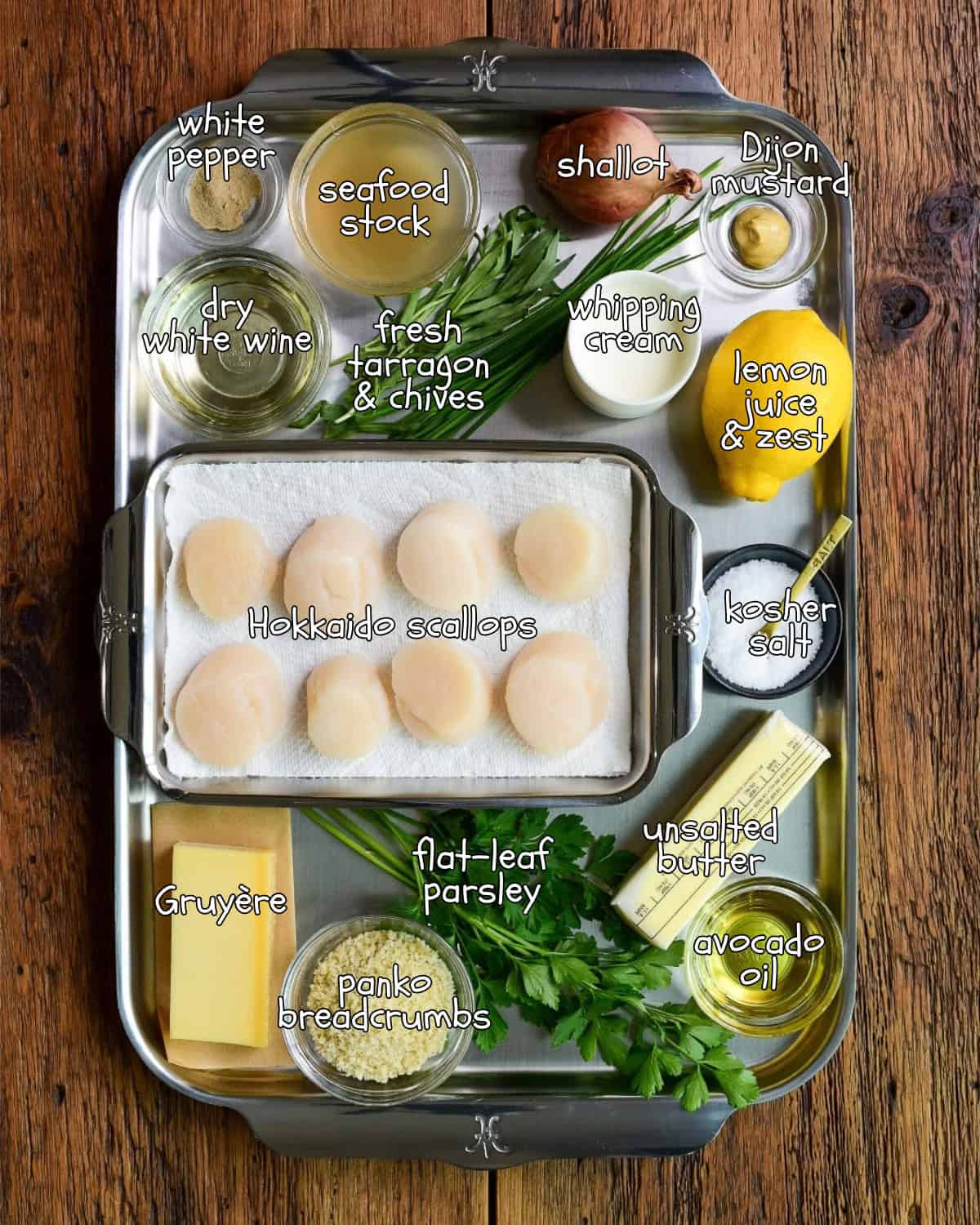
Scallops
- Hokkaido scallops, or large fresh dry-packed sea scallops
- Kosher salt
- Ground white or black pepper
- Avocado or neutral high-heat oil
- Unsalted butter
White Wine Cream Sauce
- Unsalted butter
- Shallot
- Dry white wine or sherry
- Seafood or fish stock
- Whipping cream
- Dijon mustard
- Lemon juice
- Fresh chives
- Fresh tarragon
- Kosher salt and white pepper
Gruyère Crumb Topping
- Breadcrumbs or panko
- Gruyère
- Unsalted butte
- Flat-leaf parsley
- Lemon zest
For Serving
- 8 small culinary-grade, broiler-safe scallop half shells or small ceramic coquille dishes
- Coarse salt, for stabilizing the shells
- Finely chopped fresh chives
- Lemon wedges
See the recipe card below for quantities.
Instructions
Thaw and Prepare Scallops
Thaw: For frozen scallops, thaw overnight in the refrigerator arranged in a single layer in a covered container or mesh strainer over a bowl. If vacuum-sealed, remove from plastic packaging prior to thawing. For quick thawing, seal scallops in a leakproof bag and submerge in cold water for 30 minutes.
Trim: If using fresh scallops, keep chilled until 20 minutes before cooking. Remove the tough, muscular side tab if still attached. Do not rinse scallops unless dirt is visible, as added surface water destroys browning capability.
Drying Phase 1 & 2: Sandwich scallops between paper towels and press gently. Transfer to a fresh paper towel-lined plate and refrigerate uncovered for 15 to 20 minutes. Blot once more immediately before seasoning.
Prepare Shells and Topping
Shell Bed: Position an oven rack 6 inches beneath the broiler element. Spread a ½-inch layer of coarse salt over a rimmed baking sheet. Nestle 8 broiler-safe scallop shells or ceramic coquilles level into the salt. Do not turn on the broiler yet.
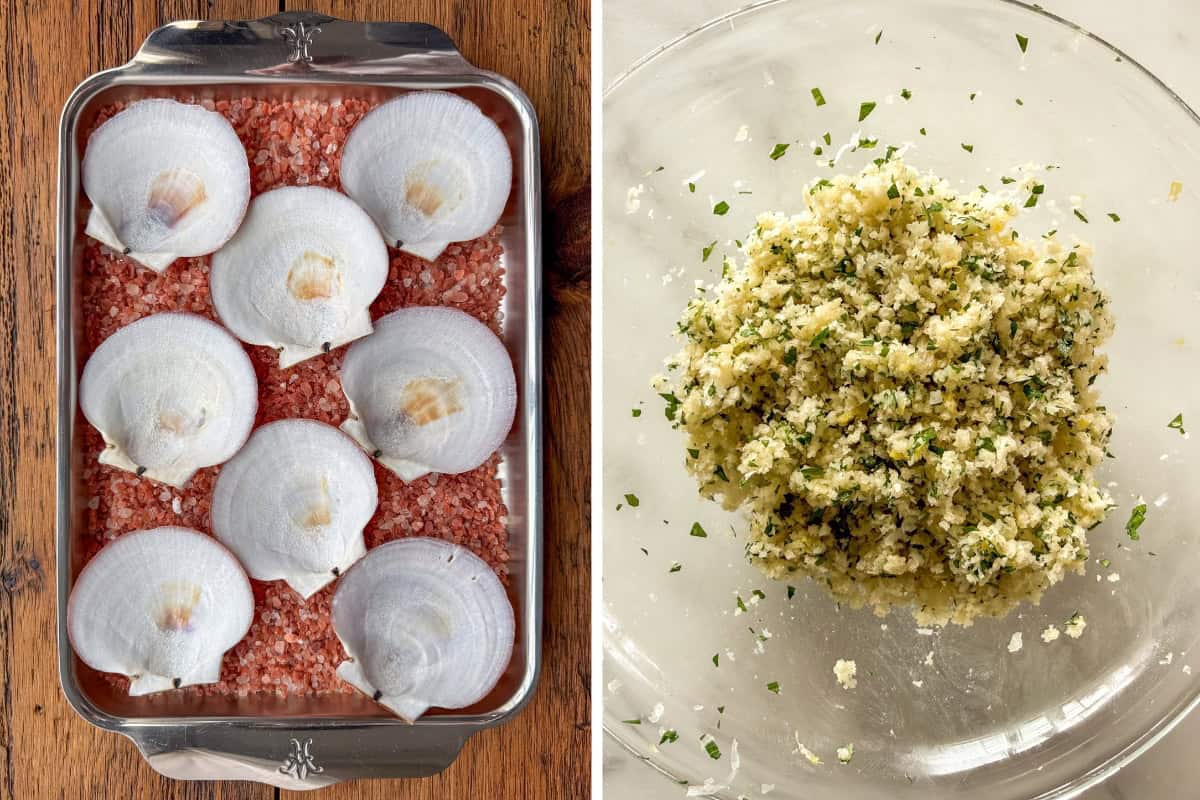
Gruyère Crumb: In a small bowl, mix breadcrumbs, grated Gruyère, melted butter, parsley, and lemon zest. Keep loose and crumbly; do not pack tightly.
Build the White Wine Cream Sauce
Melt 2 teaspoons butter in a small saucepan over medium-low heat. Add shallots and sweat for 2 to 3 minutes until translucent without letting them brown.
Pour in white wine, turn heat to medium, and simmer steadily for 4 to 6 minutes until reduced to 2 tablespoons.
Add seafood stock and simmer 3 to 5 minutes until liquid measures ¼ cup.
Stir in 35% cream and maintain a gentle simmer for 5 to 7 minutes, stirring frequently, until the sauce coats the back of a spoon and measures ½ cup.

Remove from heat. Set aside. Do not add lemon, Dijon, or herbs yet.
Sear the Scallops
Turn the broiler on High to preheat for 5 minutes. Place an 11″ skillet over medium heat for 2 minutes to reach 375°F to 400°F (190°C to 204°C).
➡️Do not overheat the empty skillet. If you are using a copper skillet, it responds rapidly, and excessive heat can burn the butter before the scallops have finished searing
Blot the scallops one final time.
Season Batch 1: Season only 4 scallops with Windsor Kosher salt and pepper right before they enter the pan on both sides.
Sear: Add 2 teaspoons high-heat oil to the skillet. The oil should shimmer and flow easily without smoking heavily. Place 4 scallops flat-side down with 1 inch of space between them. Press gently for full contact. Cook undisturbed for 1½ to 2 minutes until a dark golden crust forms. The scallops should release with little resistance once a deep golden crust has formed. If they remain firmly attached, give them another 10 to 15 seconds rather than forcing them free.
Flip, add ½ tablespoon butter, tilt the pan, and baste for 20 to 30 seconds. Remove to a plate immediately. Scallops should still be undercooked in the center.

Batch 2: Wipe pan if butter solids browned heavily. Repeat seasoning, searing, and butter-basting with the remaining 4 scallops and oil/butter.
Assemble and Broil
Finish Sauce: Off heat, whisk Dijon mustard, fresh lemon juice, chives, and tarragon into the warm sauce. Season with salt and white pepper to taste. The sauce should be silky and pourable. If it has become too thick, stir in cream or stock 1 teaspoon at a time. If it seems thin, simmer it for another 30 to 60 seconds before adding the herbs.
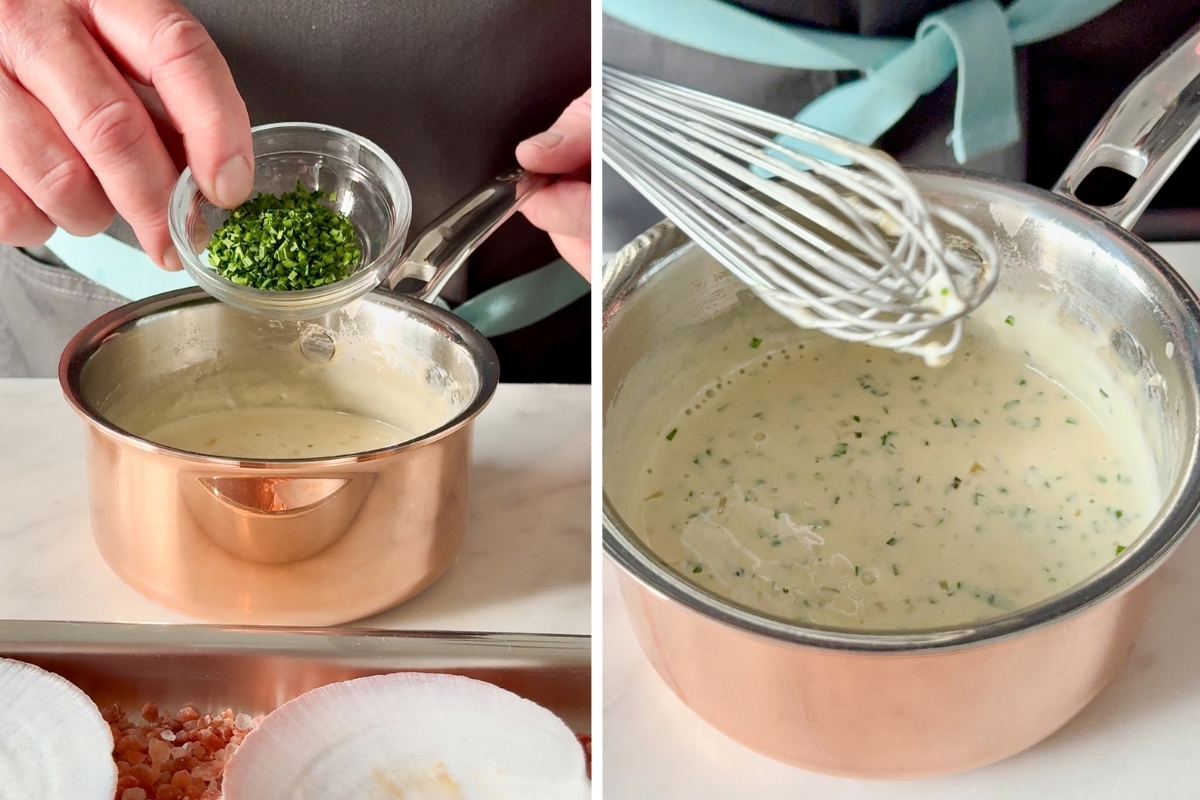
Fill Shells: Spoon 1½ teaspoons sauce into each shell. Place one scallop in each shell, browned-side up. Spoon ½ teaspoon sauce around the base, keeping the browned top exposed.
Top with 2 teaspoons of the Gruyère breadcrumb mixture distributed around the sides. Do not bury the scallop or densely pack the topping.
Broil: Before broiling, check that the shells remain level and that the sauce is not close to overflowing. Slide the tray under the broiler for 1½ to 2½ minutes. Watch constantly; remove as soon as sauce bubbles and cheese turns golden-brown.

Serve: Rest for 1 minute. Sprinkle with fresh chives and serve with lemon wedges. Warn guests that shells and salt are hot!
Scallop Selection
- Dry-packed scallops are essential for reliable browning. Wet-packed scallops are treated with phosphates that cause them to retain water. They tend to release that water in the skillet, preventing a proper golden crust and sometimes producing a slightly soapy flavour.
- Frozen scallops can produce excellent results when they were dry-packed before freezing and are thawed and dried properly. Check the ingredient list. Ideally, the package should list only scallops, without sodium tripolyphosphate or another added phosphate.
- Choose scallops of a similar diameter and thickness so they cook at approximately the same rate.
Scallop Doneness Guide
| Target Internal Temp | Visual & Texture Indicators | Best For |
| 125°F to 130°F (52°C to 54°C) | Translucent center, soft feel, extremely juicy | Connoisseurs preferring raw/soft center |
| 130°F to 135°F (54°C to 57°C) | Pearly white, opaque edges, gentle yield under pressure | Ideal Balance for Broiled Gratin |
| 140°F+ (60°C+) | Solid white, tight fibers, firm/rubbery | Overcooked |
➡️Note: The scallops will continue cooking slightly under the broiler and while standing in the heated shells.
Tips & Substitutions
- Shells: Use only culinary-grade shells specifically sold for cooking. Decorative shells may be coated, fragile or unsuitable for high heat. Ceramic coquille dishes must be specifically labelled broiler-safe, not merely oven-safe.
- 35% Cream is Non-Negotiable: Do not substitute milk or half-and-half. Lower fat percentages split under the intense heat of the broiler and fail to reduce into a stable emulsion.
- No Flour Needed: Traditional roux-based sauces can weigh down delicate seafood. Simmering 35% cream with wine and stock creates a naturally thick, velvet sauce without adding flour or cornstarch.
- Make-Ahead Protocol: You can prepare the sauce reduction up to 4 hours ahead (refrigerated). Reheat gently on low, stirring in the fresh herbs, Dijon, and lemon juice right before assembly. Never pre-sear scallops in advance.
Frequently Asked Questions
A: Yes, provided they were dry-packed prior to freezing without added chemicals. Thaw completely in the refrigerator overnight, drain thoroughly, and blot repeatedly with paper towels to eliminate moisture.
A: Sauces curdle when low-fat dairy is exposed to high heat or when acidic elements (lemon juice/wine) are boiled directly with cream. Use 35% heavy whipping cream and stir in the Dijon and lemon juice after taking the sauce off the heat.
Transparency is important to us! We are Hestan Culinary ambassadors, and this post contains affiliate links. The thoughts, tips, and results shared in this recipe are 100% our own!
We prepared these French Scallops in White Wine Cream Sauce using the new Hestan Culinary CopperBond® Aura™ 11-inch skillet and the 0.75-quart Butter Warmer along with a ¼ Sheetpan and chef’s tools.
CopperBond Aura is a special limited-production collection, handcrafted in Italy with a professional-grade 1.5 mm pure copper exterior bonded directly to a durable, nonreactive satin stainless steel interior. The copper responds quickly to temperature adjustments, offering the control needed to achieve a deep sear, a gentle braise and a smooth, cohesive sauce.
Love this recipe for French Scallops? Try These Next:
📖 Recipe
French Scallops in White Wine Cream Sauce
Ingredients
Note on Scaling the Recipe: When scaling to 2X or 3X, the light grey ingredient notes and the instructions remain unchanged. Please adjust as needed.
Scallops
- 8 large frozen Hokkaido scallops or 8 large fresh dry-packed sea scallops
- ½ teaspoon Windsor Kosher salt
- ⅛ teaspoon freshly ground white or black pepper
- 4 teaspoons neutral high-heat oil, like avocado divided
- 1 tablespoon unsalted butter divided
White Wine Cream Sauce
- 2 teaspoons unsalted butter
- 2 tablespoons very finely minced shallot
- ⅓ cup dry white wine or sherry such as Muscadet, unoaked Chardonnay, or Sauvignon Blanc
- ⅓ cup unsalted seafood or fish stock
- ½ cup 35% whipping cream
- ¾ teaspoon Dijon mustard
- ¾ teaspoon fresh lemon juice plus more to taste
- 2 teaspoons finely chopped fresh chives
- ½ teaspoon finely chopped fresh tarragon
- Windsor Kosher salt and white pepper to taste
Gruyère Crumb Topping
- 3 tablespoons coarse fresh breadcrumbs or panko
- 3 tablespoons finely grated Gruyère approximately ⅗ oz / 18 g
- ½ tablespoon unsalted butter melted
- 1½ teaspoons finely chopped flat-leaf parsley
- ¼ teaspoon finely grated lemon zest
For Serving
- 8 small culinary-grade broiler-safe scallop half shells or small ceramic coquille dishes
- Coarse salt for stabilizing the shells
- Finely chopped fresh chives
- Lemon wedges
Instructions
Thaw and Prepare Scallops
- Thaw: For frozen scallops, thaw overnight in the refrigerator arranged in a single layer in a covered container or mesh strainer over a bowl. If vacuum-sealed, remove from plastic packaging prior to thawing. For quick thawing, seal scallops in a leakproof bag and submerge in cold water for 30 minutes.
- Trim: If using fresh scallops, keep chilled until 20 minutes before cooking. Remove the tough, muscular side tab if still attached. Do not rinse scallops unless dirt is visible, as added surface water destroys browning capability.
- Drying Phase 1 & 2: Sandwich scallops between paper towels and press gently. Transfer to a fresh paper towel-lined plate and refrigerate uncovered for 15 to 20 minutes. Blot once more immediately before seasoning.
Prepare Shells and Topping
- Shell Bed: Position an oven rack 6 inches beneath the broiler element. Spread a ½-inch layer of coarse salt over a rimmed baking sheet. Nestle 8 broiler-safe scallop shells or ceramic coquilles level into the salt. Do not turn on the broiler yet.
- Gruyère Crumb: In a small bowl, mix breadcrumbs, grated Gruyère, melted butter, parsley, and lemon zest. Keep loose and crumbly; do not pack tightly.
Build the White Wine Cream Sauce
- Melt 2 teaspoons butter in a small saucepan over medium-low heat. Add shallots and sweat for 2 to 3 minutes until translucent without letting them brown.
- Pour in white wine, turn heat to medium, and simmer steadily for 4 to 6 minutes until reduced to 2 tablespoons.
- Add seafood stock and simmer 3 to 5 minutes until liquid measures ¼ cup.
- Stir in 35% cream and maintain a gentle simmer for 5 to 7 minutes, stirring frequently, until the sauce coats the back of a spoon and measures ½ cup.
- Remove from heat. Set aside. Do not add lemon, Dijon, or herbs yet.
Sear the Scallops
- Turn the broiler on High to preheat for 5 minutes. Place an 11" skillet over medium heat for 2 minutes to reach 375°F to 400°F (190°C to 204°C).
- Blot the scallops one final time.
- Season Batch 1: Season only 4 scallops with Windsor Kosher salt and pepper right before they enter the pan on both sides.
- Sear: Add 2 teaspoons high-heat oil to the skillet. The oil should shimmer and flow easily without smoking heavily. Place 4 scallops flat-side down with 1 inch of space between them. Press gently for full contact. Cook undisturbed for 1½ to 2 minutes until a dark golden crust forms. The scallops should release with little resistance once a deep golden crust has formed. If they remain firmly attached, give them another 10 to 15 seconds rather than forcing them free.
- Flip, add ½ tablespoon butter, tilt the pan, and baste for 20 to 30 seconds. Remove to a plate immediately. Scallops should still be undercooked in the center.
- Batch 2: Wipe pan if butter solids browned heavily. Repeat seasoning, searing, and butter-basting with the remaining 4 scallops and oil/butter.
Assemble, Broil & Serve
- Finish Sauce: Off heat, whisk Dijon mustard, fresh lemon juice, chives, and tarragon into the warm sauce. Season with salt and white pepper to taste. The sauce should be silky and pourable. If it has become too thick, stir in cream or stock 1 teaspoon at a time. If it seems thin, simmer it for another 30 to 60 seconds before adding the herbs.
- Fill Shells: Spoon 1½ teaspoons sauce into each shell. Place one scallop in each shell, browned-side up. Spoon ½ teaspoon sauce around the base, keeping the browned top exposed.
- Top with 2 teaspoons of the Gruyère breadcrumb mixture distributed around the sides. Do not bury the scallop or densely pack the topping.
- Broil: Before broiling, check that the shells remain level and that the sauce is not close to overflowing. Slide the tray under the broiler for 1½ to 2½ minutes. Watch constantly; remove as soon as the sauce bubbles and the cheese turns golden-brown.
- Serve: Rest for 1 minute. Sprinkle with fresh chives and serve with lemon wedges. Warn guests that shells and salt are hot!
💬Tried this Recipe?
- We'd really appreciate a rating and a quick review! It helps more home cooks find the recipe, and we love hearing what you think.
Notes
Scallop Selection
- Dry-packed scallops are essential for reliable browning. Wet-packed scallops are treated with phosphates that cause them to retain water. They tend to release that water in the skillet, preventing a proper golden crust and sometimes producing a slightly soapy flavour.
- Frozen scallops can produce excellent results when they were dry-packed before freezing and are thawed and dried properly. Check the ingredient list. Ideally, the package should list only scallops, without sodium tripolyphosphate or another added phosphate.
- Choose scallops of a similar diameter and thickness so they cook at approximately the same rate.
Tips & Substitutions
- Shells: Use only culinary-grade shells specifically sold for cooking. Decorative shells may be coated, fragile or unsuitable for high heat. Ceramic coquille dishes must be specifically labelled broiler-safe, not merely oven-safe.
- 35% Cream is Non-Negotiable: Do not substitute milk or half-and-half. Lower fat percentages split under the intense heat of the broiler and fail to reduce into a stable emulsion.
- No Flour Needed: Traditional roux-based sauces can weigh down delicate seafood. Simmering 35% cream with wine and stock creates a naturally thick, velvet sauce without adding flour or cornstarch.
- Make-Ahead Protocol: You can prepare the sauce reduction up to 4 hours ahead (refrigerated). Reheat gently on low, stirring in the fresh herbs, Dijon, and lemon juice right before assembly. Never pre-sear scallops in advance.


Leave a Reply