

We are so excited to share this one with you because it completely transforms a humble pork butt into something truly special. Imagine your kitchen filling with the scent of fresh garlic, woodsy oregano, and bright citrus long before dinner hits the table. This is the kind of meal that feels like a big, warm hug from a Mediterranean grandmother, yet it is simple enough to pull off on any slow Sunday afternoon.

You will love how the fingerling potatoes absorb the pork drippings and lemony broth, becoming almost creamy on the inside with perfectly caramelised edges. It is a full, vibrant spread that looks like you spent all day hovering over the stove, but the oven does nearly all the heavy lifting for you!
It's the kind of meal where everyone keeps going back for "just one more potato."
Jump to:
Why We Love This Recipe
- One-Pan Harmony: The pork drippings naturally season the potatoes, creating a deep, savoury flavour you can’t get any other way.
- Textural Contrast: You get tender, sliced pork paired with caramelized potatoes and snap-tender, charred broccoli and peppers.
- Foolproof Technique: We tackle the “pork stall” head-on, ensuring your roast is succulent and easy to slice every single time.
- Bright Finishes: The addition of briny olives and fresh parsley at the end cuts through the richness of the roast beautifully.
Ingredients

The Pork
- Pork butt roast (See Butcher's Notes)
- Kosher salt
- Black pepper
- Extra virgin olive oil
- Garlic
- Dried oregano
- Lemon zest
Fingerlings and Pan Base
- Fingerling potatoes
- Yellow onion
- Lemon
- Olive oil
- Kosher salt
- Black pepper
- Dried oregano
Pan Liquid
- Chicken stock
- Lemon juice (60 ml)
- Dry white wine
High-Heat Roasted Vegetables, optional
- broccoli
- Mini sweet peppers
- Olive oil
- Salt and pepper
The Finish
- Olives (Castelvetrano or Kalamata)
- Parsley
- Lemon wedges
See recipe card below for exact quantities.
Instructions
Preheat
Heat your oven to 325°F (163°C).
Season the Pork
Combine the olive oil, garlic, oregano, lemon zest, salt, and pepper in a small bowl. Pat the pork dry with paper towels and rub the mixture evenly over the entire roast. Let it sit for 20 to 30 minutes to marry the flavours while you prep the vegetables.

Prepare the Fingerlings
In a 14.5" roasting pan, toss the fingerlings, onion wedges, and lemon wedges with the chicken stock, lemon juice, wine, olive oil, salt, pepper, and oregano. Mix to combine. Arrange the potatoes cut side down for maximum browning.
Position the Pork
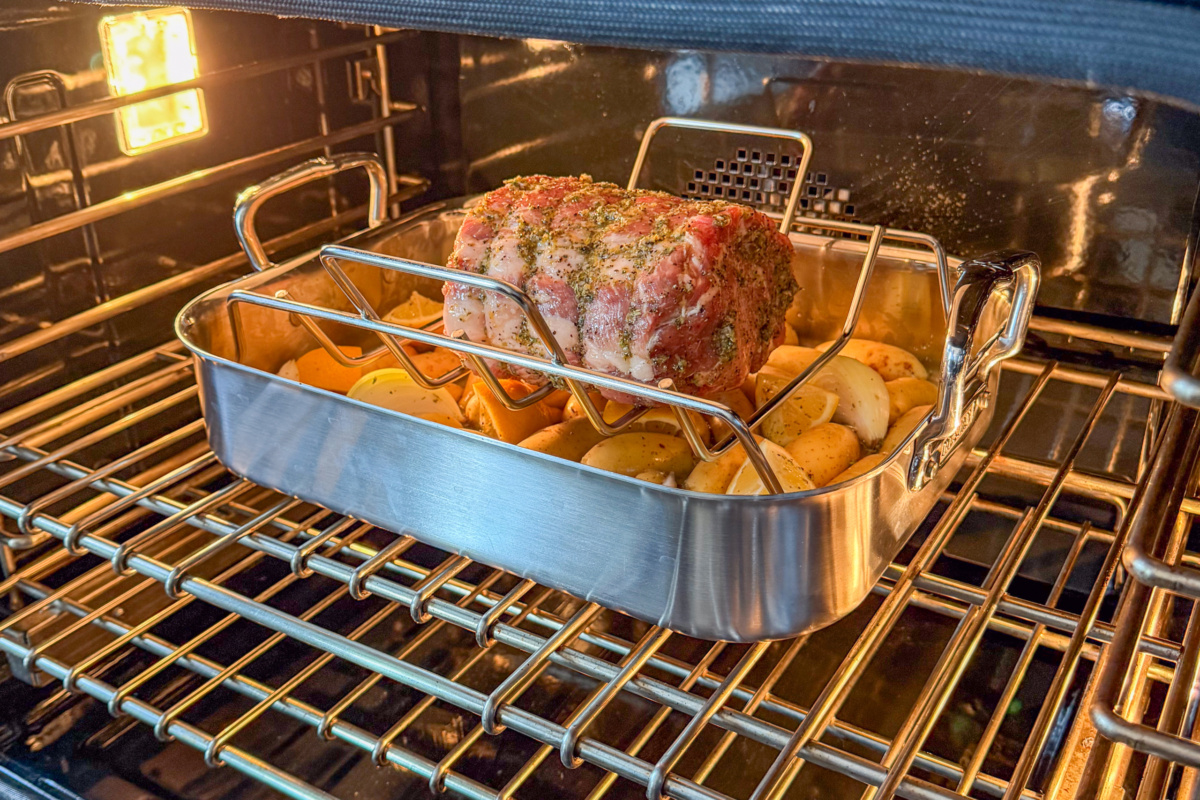
Place a roasting rack over the pan and set the pork on the rack. This allows the juices to drip directly onto the potatoes.

Initial Roast
Place the roaster in the oven and roast at 325°F (163°C). After 60 minutes, gently stir the potatoes to ensure they cook evenly in the liquid.
Manage the “Stall”
Continue roasting until the pork reaches an internal temperature of 150°F (65°C). If the temperature stops rising (the “stall”), increase the oven heat to 350°F (177°C). Read more about Understanding the Pork “Stall”
Check the pan every 45 to 60 minutes; if the liquid has evaporated, add ½ cup of stock or water to prevent scorching. The pan should always contain a small amount of liquid to prevent scorching.
If the Potatoes Finish Early
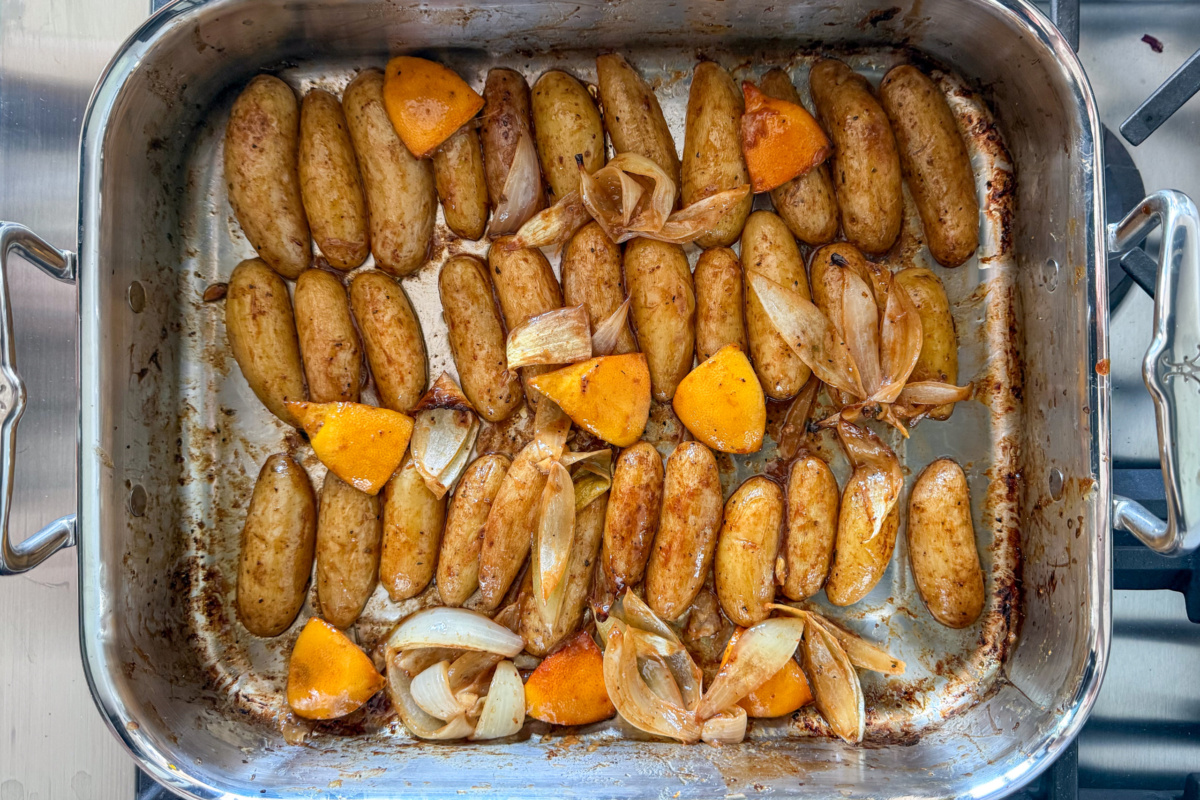
If the potatoes become deeply browned before the pork reaches 180F, remove the roaster from the oven. Transfer the pork (still on the rack) to a sheet pan and continue roasting. The potatoes will return to the oven later for finishing.
Rest the Meat
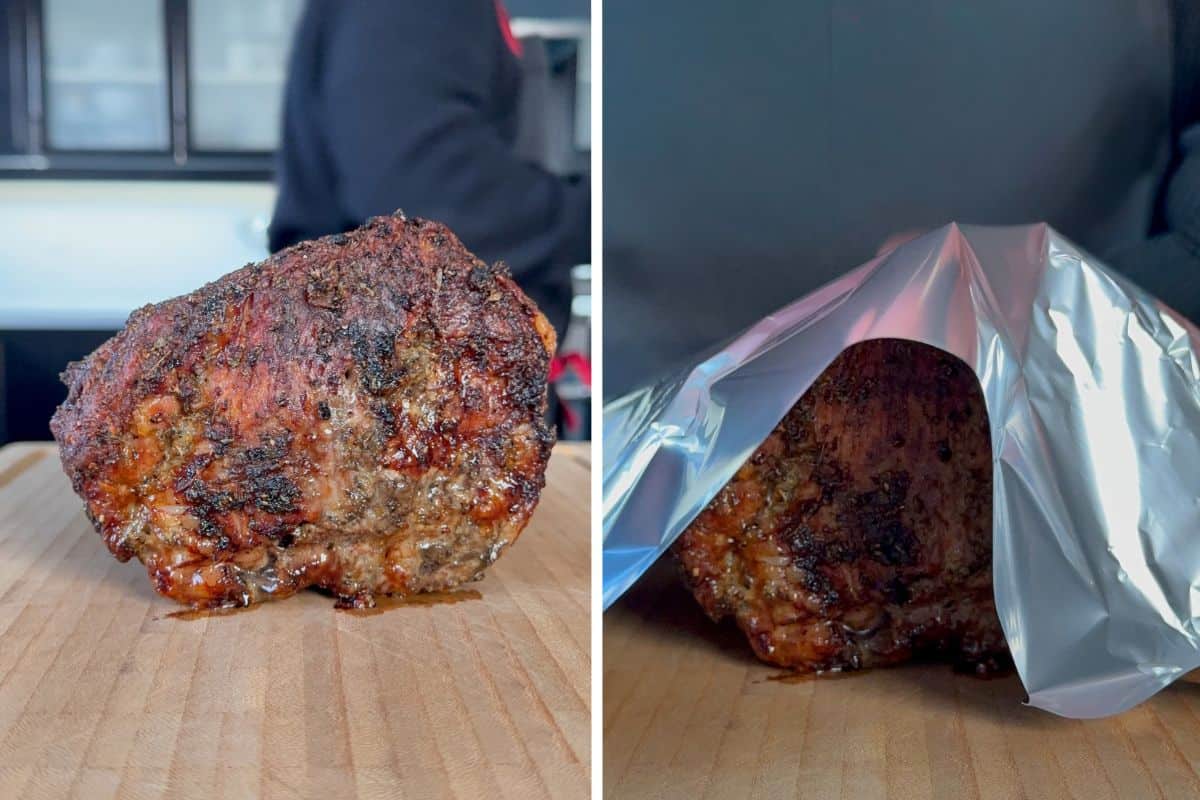
When the pork reaches 185°F to 190°F (85°C to 88°C), remove it from the oven. Transfer to a cutting board and loosely tent with foil until it reaches the final temperature. and let it rest for 15 to 20 minutes.
Heat and Char
Increase the oven temperature to 425°F (218°C). Return the potatoes to the oven for 10 to 15 minutes to warm up. On a separate sheet pan, toss the broccoli and mini peppers with olive oil, salt, and pepper. Roast for 10 to 12 minutes until lightly charred.
Serve
Slice the pork into half-inch slices.

Toss the crushed olives and parsley over the pork and the potatoes. Arrange everything in a large serving dish, spoon a bit of those delicious (strained) pan juices over the meat, and serve with extra lemon wedges.

Serving Suggestion: Serve this with a side of tzatziki sauce, crusty bread and a fresh Greek Village Salad (Horiatiki Salata).
Tips & Substitutions
- Pro Tip: Always use a digital meat thermometer inserted into the thickest part of the roast. Pork butts vary in fat content; the internal temperature is a much more reliable guide than the clock!
- The Best Potatoes: If you cannot find fingerlings, baby Yukon Gold potatoes, halved or quartered, work beautifully.
- Wine Swap: If you prefer not to cook with wine, simply replace the ¼ cup of white wine with extra chicken stock and a teaspoon of white wine vinegar.
- Vegetable Variations: Asparagus or green beans make great substitutes for broccolini; just adjust roasting time, as they may cook faster.
Butcher's Notes
- Choosing Your Cut: When you head to the meat counter, look for a Boston Butt (also labelled as Pork Butt). While this is technically the upper part of the pork shoulder, it is the most marbled and tender portion. If you see a “Picnic Shoulder,” keep in mind it is leaner and often has the bone and skin attached, which will change your cooking time. For the most succulent, easy to slice results, the tied and rolled pork butt is your best friend!
- The “Roll”: If your butcher sells it untied, just ask them to trim, “roll and tie” it for you. This ensures the roast is a uniform thickness so every slice is just as juicy as the last.
Understanding the Pork “Stall”
- When roasting pork butt or shoulder, it is normal for the internal temperature to slow dramatically or appear to stop rising between about 150°F and 170°F. This phase is commonly called the “stall”.
What is happening
- As the pork cooks, moisture on the surface begins to evaporate. Evaporation cools the meat in the same way as perspiration cools skin. During this period, the heat entering the meat is temporarily balanced by the cooling effect of evaporation.
- Because of this, the thermometer may hold at nearly the same temperature for 30 to 60 minutes or sometimes longer.
- This is expected when cooking pork butt and does not indicate a problem with the oven or the recipe.
How to Manage the Stall
- Step 1 - Observe the temperature trend. Once the pork reaches about 150°F internal, begin checking the thermometer every 20 to 30 minutes. If the temperature continues rising slowly, simply continue roasting at 325°F.
- Step 2 - If the temperature stalls. If the temperature remains nearly unchanged for about 30 minutes within the 150-170°F range, raise the oven temperature to 350°F. The slightly higher oven heat helps overcome the evaporative cooling and allows the internal temperature to begin rising again.
- Step 3 - Continue cooking. Maintain 350°F until the pork reaches 185-190°F, which is the ideal range for a tender butt and shoulder roast that still slices cleanly. Once the stall breaks, the temperature will usually begin climbing more steadily again.
What to Expect
A typical temperature progression for a roast of this size may look like this:
| Internal Temperature | What Happens |
| 120–140°F | Temperature rises steadily |
| 145–150°F | Rise begins slowing |
| 150–170°F | A stall may occur |
| 170–180°F | Temperature begins rising again |
| 185–190°F | Roast becomes tender and ready to rest |
Because the stall can vary in duration, total roasting time for a pork shoulder of this size typically falls between 3 and 4 hours.
Loved This Greek Pork Roast? Try These Next:
- Slow Roasted Greek Lamb Shoulder with Roasting Pan Potatoes
- Maple Glazed Rack of Pork Roast
- Slow-Roasted Bone-In Prime Rib
- Rotisserie Honey Garlic Pork Roast
Equipment Used: This Greek pork roast was made in collaboration with Hestan Culinary. We used our Hestan Provisions 14.5-Inch Polished Clad Stainless Steel Roaster with Rack and sheet pans. All opinions in this post are always my own.
📖 Recipe
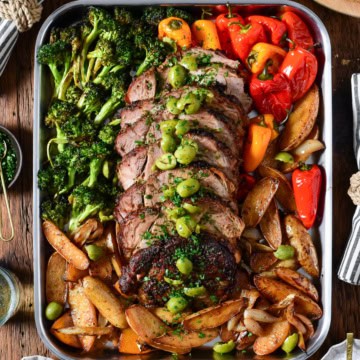
Greek Lemon Oregano Pork Roast with Fingerling Potatoes
Ingredients
The Pork
- 3.2 lb rolled pork butt roast 1.45 kg trimmed and tied. (See Butcher's Notes below)
- 1 ¾ teaspoon coarse kosher salt
- 1 teaspoon black pepper
- 2 tablespoon olive oil
- 4 cloves garlic finely grated
- 1 tablespoon dried oregano
- 1 teaspoon lemon zest
Fingerlings and Pan Base
- 2 lb fingerling potatoes halved lengthwise (900 g)
- 1 large yellow onion cut into wedges
- 1 lemon cut into wedges (seeds removed)
- 1 ½ tablespoon olive oil
- ¾ teaspoon coarse kosher salt
- ¼ teaspoon black pepper
- 1 teaspoon dried oregano
Pan Liquid
- 1 cup chicken stock 240 ml
- ¼ cup fresh lemon juice 60 ml
- ¼ cup dry white wine 60 ml
High-Heat Roasted Vegetables, optional
- 1 broccoli
- 12 oz mini sweet peppers halved (350g)
- 2 tablespoon olive oil
- Pinch of salt and pepper
The Finish
- ½ cup olives lightly crushed (Castelvetrano or Kalamata)
- ¼ cup chopped parsley
- Lemon wedges for serving
Instructions
- Preheat: Heat your oven to 325°F (163°C).
- Season the Pork: Combine the olive oil, garlic, oregano, lemon zest, salt, and pepper in a small bowl. Pat the pork dry with paper towels and rub the mixture evenly over the entire roast. Let it sit for 20 to 30 minutes to marry the flavours while you prep the vegetables.
- Prepare the Fingerlings: In a 14.5" roasting pan, toss the fingerlings, onion wedges, and lemon wedges with the chicken stock, lemon juice, wine, olive oil, salt, pepper, and oregano. Mix to combine. Arrange the potatoes cut side down for maximum browning.
- Position the Pork: Place a roasting rack over the pan and set the pork on the rack. This allows the juices to drip directly onto the potatoes.
- Initial Roast: Place the roaster in the oven and roast at 325°F (163°C). After 60 minutes, gently stir the potatoes to ensure they cook evenly in the liquid.
- Manage the "Stall": Continue roasting until the pork reaches an internal temperature of 150°F (65°C). If the temperature stops rising (the "stall"), increase the oven heat to 350°F (177°C). Read more about Understanding the Pork "Stall".Check the pan every 45 to 60 minutes; if the liquid has evaporated, add ½ cup of stock or water to prevent scorching. The pan should always contain a small amount of liquid to prevent scorching.
- If the Potatoes Finish Early: If the potatoes become deeply browned before the pork reaches 180F, remove the roaster from the oven. Transfer the pork (still on the rack) to a sheet pan and continue roasting. The potatoes will return to the oven later for finishing.
- Rest the Meat: When the pork reaches 185°F to 190°F (85°C to 88°C), remove it from the oven. Transfer to a cutting board and loosely tent with foil until it reaches the final temperature. and let it rest for 15 to 20 minutes.
- Heat and Char: Increase the oven temperature to 425°F (218°C). Return the potatoes to the oven for 10 to 15 minutes to warm up. On a separate sheet pan, toss the broccoli and mini peppers with olive oil, salt, and pepper. Roast for 10 to 12 minutes until lightly charred.
- Serve: Slice the pork into half-inch slices. Toss the crushed olives and parsley over the pork and the potatoes. Arrange everything in a large serving dish, spoon a bit of those delicious (strained) pan juices over the meat, and serve with extra lemon wedges.Serving Suggestion: Serve this with a side of store-bought or homemade tzatziki sauce and a fresh Greek Village Salad (Horiatiki Salata).
- 💬Tried this recipe? We'd really appreciate a rating and quick review! It helps more home cooks find the recipe, and we love hearing what you think.
Video
Notes
Tips & Substitutions
- Pro Tip: Always use a digital meat thermometer inserted into the thickest part of the roast. Pork butts vary in fat content; the internal temperature is a much more reliable guide than the clock!
- The Best Potatoes: If you cannot find fingerlings, baby Yukon Gold potatoes, halved or quartered, work beautifully.
- Wine Swap: If you prefer not to cook with wine, simply replace the ¼ cup of white wine with extra chicken stock and a teaspoon of white wine vinegar.
- Vegetable Variations: Asparagus or green beans make great substitutes for broccolini; just adjust roasting time, as they may cook faster.
Butcher’s Notes
- Choosing Your Cut: When you head to the meat counter, look for a Boston Butt (also labelled as Pork Butt). While this is technically the upper part of the pork shoulder, it is the most marbled and tender portion. If you see a "Picnic Shoulder," keep in mind it is leaner and often has the bone and skin attached, which will change your cooking time. For the most succulent, easy to slice results, the tied and rolled pork butt is your best friend!
- The "Roll": If your butcher sells it untied, just ask them to trim, "roll and tie" it for you. This ensures the roast is a uniform thickness so every slice is just as juicy as the last.
Leave a Reply